Equilibrium strategies are built on an assumption: that your opponent can and will adjust to punish any imbalance in your play. In low-stakes online tournaments, that assumption is false. The field is large, mostly recreational, and relies on intuition, incomplete heuristics and emotional responses rather than on structured analysis.
Those players make large, repeatable strategic errors. Exploitative poker is the discipline of identifying those errors and deviating from theory to profit from them. Done well, it is worth far more than a slightly more accurate solver approximation.
Why exploitation works at low stakes
A balanced strategy protects you against a perfect opponent. Against an imperfect one, it leaves money on the table. If the field over-folds to three-bets, your balanced three-bet range is too tight. If the field never bluffs rivers, your balanced bluff-catching range is calling too often.
The key is that low-stakes populations deviate in consistent directions. You are not guessing about one unknown opponent; you are playing against a tendency that thousands of hands have already revealed.
Pre-flop exploits
Two mistakes dominate pre-flop play in these fields: calling too much and three-betting too little.
When opponents call opens with far too wide a range, bluff-raising loses value and value-raising gains it. Open tighter for value, size up with your strong hands, and expect to be called by dominated holdings.
When opponents rarely three-bet, you can open wider from late position without fear of being pressured, and you can treat a three-bet as a much stronger signal than theory would suggest. Folding hands that a solver would continue with is often correct against a three-bet range made entirely of premiums.
Post-flop passivity
Low-stakes players check medium-strength hands without protecting their checking range. They do not check-raise enough, and they do not bluff enough on later streets.
The exploit is barrelling. When a passive opponent checks twice, their range is weighted toward hands that cannot stand pressure. Bet the turn and river more often than theory recommends, with sizes that make continuing uncomfortable.
The flip side: when a passive player does raise, believe them. Their raising range is value-heavy, and folding hands that a solver would continue with is correct.
Thin value
Calling-heavy opponents make thin value betting profitable in spots where equilibrium strategy would check. Second pair on the river against a station is a bet, not a check-back. Recreational players call with far worse than theory predicts, and each extra value bet is a small, repeatable edge.
River under-bluffing
Large river bets make most recreational players uncomfortable. They do not pull the trigger with air often enough. That means big river aggression from an unknown low-stakes opponent is mostly value, and disciplined folding with bluff-catchers is a legitimate exploit even when it feels weak.
Tournament-specific pressure
Tournaments add a dimension cash games do not have. Stack pressure, the bubble and ICM make players risk-averse in predictable ways.
Near pay jumps, medium stacks tighten dramatically. The big stack can raise and re-raise with a range that would be suicidal in a cash game, because the folds are coming. Short stacks, conversely, often shove too wide out of desperation; calling them tighter than theory, with the best hands only, is frequently right.
Avoid over-adjusting
The danger with exploitation is treating every impression as a fact. A player who folded twice is not a fish; they are a player who folded twice.
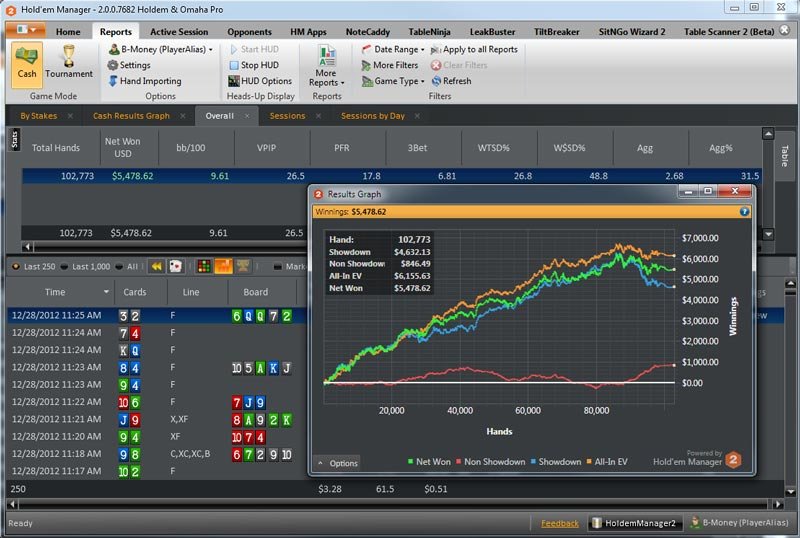
The practical method is Bayesian. Start with the population tendency as your baseline. Treat each individual observation as evidence that moves you away from that baseline, in proportion to how surprising it is and how many times you have seen it. Big adjustments need big samples. Small ones can be made quickly.
The goal
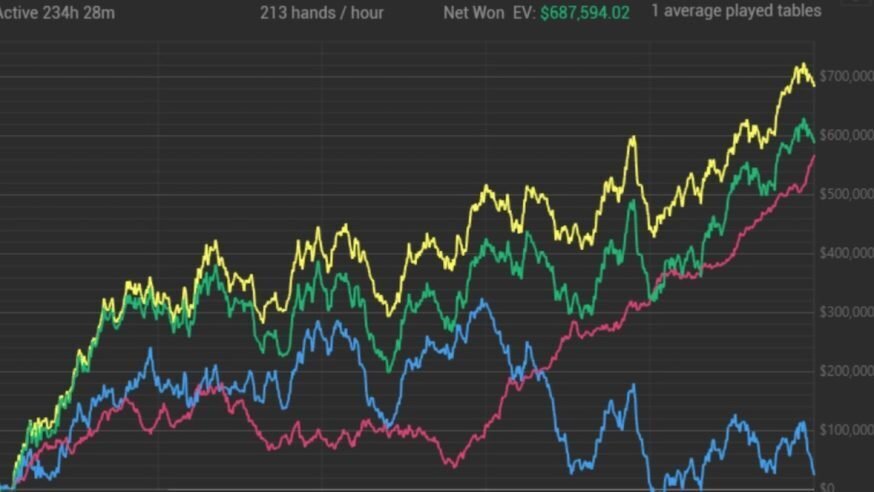
Solver output is a reference point, not an instruction. The correct play in a low-stakes online tournament is the action with the highest expected value against the opponent who is actually sitting at your table. Learn the population, confirm it with your own data, deviate deliberately, and keep records so that you can tell the difference between a real edge and a lucky week.