One of November 2026’s biggest AI and poker stories is unfolding in Silicon Valley, where Sequoia Capital, OpenAI, and Citadel Securities are bringing together student developers for a $100,000 poker bot competition. With the Bay Area application deadline arriving on November 3, the race to build a winning poker-playing algorithm is heating up.
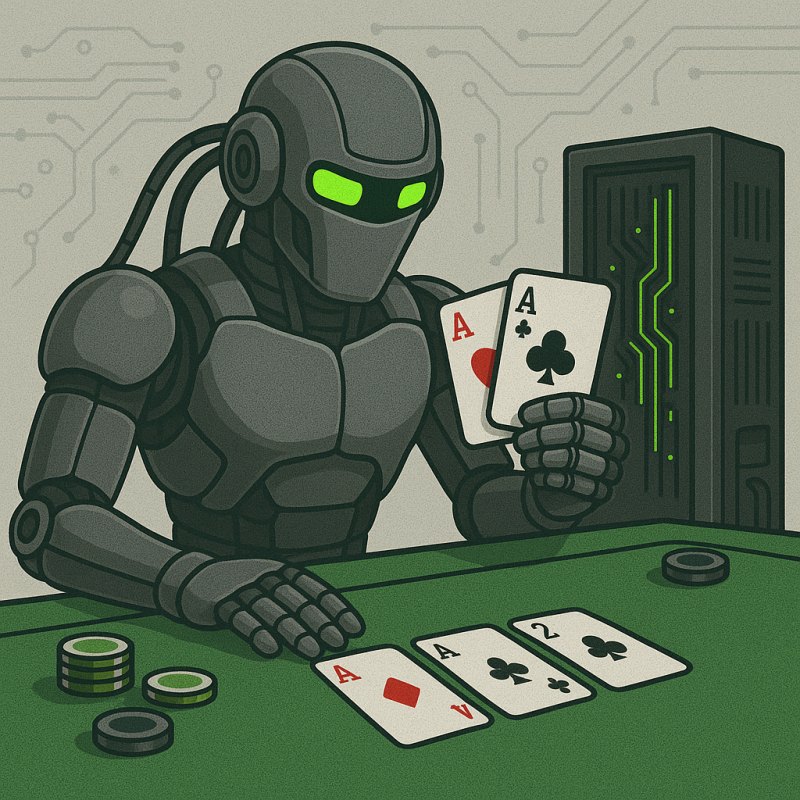
Artificial intelligence is taking center stage in the poker world this November, but the latest competition is not about robots sitting across from professional poker players. Instead, some of the brightest young programmers will be building their own poker bots and sending them into thousands of simulated games, competing for a six-figure first-place prize.
The event, officially called No Limit: A Bot Building Tournament, was announced on October 27, 2026, by Sequoia Capital in partnership with OpenAI and Citadel Securities. The competition brings together poker strategy, artificial intelligence, game theory, and software engineering in a format designed to test how quickly developers can create effective autonomous agents.
Sequoia partner Shaun Maguire helped bring attention to the announcement through his post on X, which recorded 65,869 impressions in the reported snapshot. Maguire described the initiative as an experiment involving new rules for an increasingly AI-driven world.
The immediate focus is the Bay Area regional competition, where applications close at 11:59 p.m. Pacific Time on November 3. The first tournament takes place in Menlo Park on November 6, followed by additional regional events and a November 15 championship in San Francisco.
For poker enthusiasts and AI developers alike, the announcement introduces a fascinating question: what happens when the ability to build a poker strategy becomes just as important as knowing how to play the game?
A $100,000 Poker Bot Competition Brings Silicon Valley Into the Game
Poker and technology have been closely connected for years, but Sequoia's new tournament represents an unusual meeting of two competitive environments.
On one side is poker, a game built around probability, incomplete information, risk management, and strategic decision-making. On the other is artificial intelligence, where developers attempt to build systems capable of making effective decisions under increasingly demanding conditions.
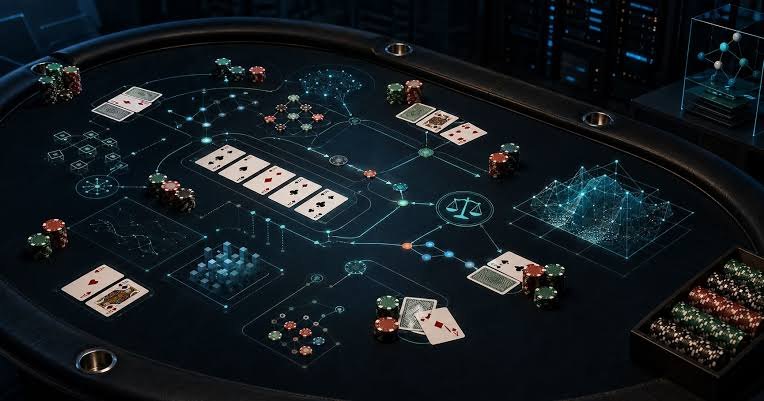
The No Limit tournament puts these disciplines together, offering a $100,000 grand prize to the team that produces the strongest performance in the championship competition.
The involvement of three major organizations gives the event significance beyond its financial rewards.
Sequoia Capital is one of Silicon Valley's prominent venture capital firms, while OpenAI is a leading developer of artificial intelligence systems. Citadel Securities brings expertise from an industry where computational speed, statistical analysis, and automated decision-making are central to daily operations.
Although their businesses are different, the competition highlights a shared technical challenge: making decisions when information is incomplete, time is limited, and the actions of other participants influence the outcome.
Poker provides a natural testing environment for these capabilities.
Unlike chess, where every piece is visible, poker requires players to make decisions without knowing their opponents' private cards. A successful strategy must account for uncertainty, potential deception, changing probabilities, and the consequences of betting decisions.
For an AI poker bot, these considerations have to be translated into executable instructions.
The tournament also differs from conventional poker competitions in a fundamental respect. No human competitors will actually play hands against one another, and the simulated chips carry no monetary value.
Instead, programmers compete by designing the algorithms responsible for every decision.
The result is a competition in which the strongest player may not be the person with the best traditional poker instincts, but the developer who can translate strategic principles into reliable, efficient software.
That distinction could make the November event particularly interesting for those following the future of poker technology.
How the Sequoia and OpenAI Poker Bot Tournament Will Work
The most striking feature of the No Limit competition is its restricted development window.
According to the official tournament rules, teams receive just 60 minutes to construct a poker bot using Python. Participants can enter individually or as a two-person team, and the precise poker variant will remain undisclosed until the building phase begins.
This prevents competitors from knowing every strategic requirement before arriving at the event.
Organizers will provide a starter package containing an agent template, simulation tools, blind structures, payout information, and an Independent Chip Model calculator.
Developers can use AI-assisted programming tools, including Codex, to help create, debug, and improve their software. However, there is an important limitation: the submitted bots must make gameplay decisions independently.
Once deployed, they operate in isolated environments without internet access or connections to external AI services.
Every decision must also be completed within one millisecond.
That requirement creates a significant engineering challenge. A poker algorithm may be strategically sophisticated, but if it cannot produce an action quickly enough, it risks automatically checking or folding.
The competition therefore rewards more than theoretical poker knowledge. Code efficiency and operational reliability could prove equally important.
After the initial development period, the bots enter six scored tournaments. Each tournament consists of 10,000 simulated eight-player sit-and-go games, with programs randomly assigned to tables.
Bots begin each table with 2,000 chips, while blinds increase as play progresses. Tables continue until one bot has collected all the chips or the game reaches its 200-hand limit.
Scoring is based on average finishing performance across the simulations, with later rounds carrying progressively greater weight.
Importantly, developers can continue improving their bots between scored tournaments.
This adds another competitive dimension. Teams must examine performance, identify potential weaknesses, and decide which changes are worth implementing before the next round begins.
An algorithm that performs well initially may struggle once other developers make adjustments.
Conversely, a team whose first submission produces disappointing results could recover by improving its strategy during the event.
The six-round structure makes adaptability a potentially decisive factor in determining the eventual winners.
Why Poker Strategy and Game Theory Could Decide the Winner
Building a successful poker bot involves much more than calculating whether a hand is strong enough to play.
A capable system must consider how its actions affect opponents, how different betting decisions change expected outcomes, and how to manage uncertainty over thousands of hands.
One of the central concepts in modern poker strategy is game theory optimal play, commonly known as GTO.
The principle involves developing strategies that are difficult for opponents to exploit, often through balanced betting frequencies, carefully constructed ranges, and mixed decisions.
In traditional poker, players may spend years developing an understanding of these concepts. At the Sequoia tournament, programmers will have to incorporate useful strategic ideas into software within a remarkably short period.
That does not necessarily mean the most complicated algorithm will win.
Given the one-millisecond decision limit, developers may benefit from relatively simple systems that consistently make reasonable choices rather than computationally expensive models that struggle to operate within the permitted time.
Tournament-specific considerations are equally important.
In a poker cash game, maximizing expected chip value is often a central objective. In a tournament structure, however, survival and finishing position can introduce additional strategic considerations.
A bot that aggressively pursues small advantages may accumulate chips quickly but also expose itself to unnecessary elimination risk.
Another bot might sacrifice some immediate opportunities to improve its chances of reaching a higher finishing position.
The competition's use of Independent Chip Model calculations for unresolved tables reinforces the importance of understanding tournament equity rather than relying exclusively on conventional hand strength.
There is also the issue of opponent behavior.
Because every participant is developing an independent algorithm, the overall playing environment could change from round to round.
Some programs may prioritize conservative decision-making, while others could incorporate more aggressive betting approaches or attempt to exploit predictable patterns.
Successful bots will need strategies that remain effective against a variety of opponents.
The most interesting possibility is that the competition produces unexpected results.
A relatively straightforward algorithm may outperform more ambitious programs if it is faster, more consistent, or better suited to the tournament's scoring system.
For experienced poker players, that possibility will be particularly compelling. It creates an opportunity to observe familiar strategic concepts tested through software rather than human intuition.
November 3 Bay Area Deadline Starts the Road to San Francisco
The first major deadline arrives on Tuesday, November 3, when applications for the Bay Area regional close at 11:59 p.m. Pacific Time.
The opening competition is scheduled for Friday, November 6, in Menlo Park, California.
Additional regional events will take place in Cambridge, Massachusetts, on November 9, and Pittsburgh, Pennsylvania, on November 12.
Applications for those events remain open until November 6 and November 9, respectively, with deadlines set at 11:59 p.m. Eastern Time.
All three competitions are scheduled as in-person events, with participants required to attend their chosen regional for the full session.
The tournament is specifically aimed at university students and recent graduates.
Eligibility extends to students currently attending universities in the United States or Canada, along with graduates from the classes of 2025 and 2026.
Competitors under 18 must obtain parental or guardian consent, while participation is free and does not require purchasing OpenAI products or services.
Teams can consist of either one or two developers, and teammates do not need to attend the same university.
Available places are limited, with applications reviewed on a rolling basis.
This means interested participants have an incentive to apply before the final deadline rather than assuming places will remain available.
The rewards begin before the championship.
The five highest-performing teams at each regional will receive $5,000 per team and advance to the San Francisco finals. Organizers may also select up to five additional wildcard teams based on regional performances.
Travel to the championship is covered for qualifying teams.
The finals, scheduled for Sunday, November 15, will award $100,000 to the winning team, $50,000 to second place, and $25,000 to third.
For two-person teams, prize money is split equally between teammates.
Applications and further competition details are available through the official No Limit tournament website.
With the opening regional only days away, the immediate question is which young developers will secure their places before registration closes.
From Libratus to Pluribus: Why AI Poker Has Become a Serious Technology Test
Although the Sequoia competition introduces a new format, artificial intelligence has already achieved remarkable milestones in poker.
In 2017, a program called Libratus, developed by researchers at Carnegie Mellon University, defeated four leading professional players in heads-up no-limit Texas Hold'em.
The competition involved 120,000 hands and demonstrated that an AI system could outperform elite human opponents in a game requiring complex reasoning under uncertainty.
Two years later, another major breakthrough arrived.
Pluribus, developed through research involving Carnegie Mellon University and Facebook AI, demonstrated superhuman performance in multiplayer no-limit Texas Hold'em.
That achievement was particularly significant because multiplayer poker introduces additional strategic complexity.
An algorithm must consider how several opponents interact, creating situations that are substantially more difficult to model than a simple two-player contest.
These developments established poker as an important testing ground for artificial intelligence research.
However, the upcoming No Limit event asks a somewhat different question.
Libratus and Pluribus represented sophisticated research projects developed through extensive technical work. Sequoia's competition challenges students to create functioning agents under severe time constraints.
Rather than testing whether advanced AI research can produce a strong poker player, the event examines how quickly talented developers can build competitive systems using modern programming tools.
This reflects a broader shift in artificial intelligence development.
AI-assisted coding has made it possible to create working software much faster than traditional development processes often allowed. Yet the quality of the finished product still depends on how effectively developers define problems, evaluate results, and correct mistakes.
Poker offers a particularly demanding environment for that process.
Every action has consequences, and an apparently reasonable decision can perform poorly when repeated across thousands of situations.
The competitive format should make differences between strategies easier to observe than a handful of isolated poker hands would allow.
At the same time, the results will not establish which AI system is universally strongest at poker. The winner will be determined by the specific rules, opponents, time limits, and scoring structure used in the event.
That limitation does not diminish the experiment.
Instead, it makes the tournament an interesting demonstration of practical AI engineering, where the goal is to produce reliable decisions under real constraints.
For poker enthusiasts, the event could also offer a closer look at how automated strategies respond to situations that human players routinely confront.
What the $100K Finals Could Mean for the Future of AI and Poker
Attention will ultimately turn to San Francisco on November 15, when the best-performing regional teams compete for the championship prizes.
The finals will follow the same general format as the regional events, but organizers plan to introduce a different poker variant.
That change could significantly affect the competition.
Developers who successfully optimized their systems for the opening rounds may need to adapt to unfamiliar strategic conditions, preventing the championship from becoming a straightforward repetition of earlier results.
The eventual winner will have demonstrated several abilities at once: understanding an unfamiliar problem, developing software quickly, managing technical limitations, and producing competitive decisions across a large number of simulated games.
Those capabilities extend beyond poker.
The underlying challenges resemble problems encountered in automated trading, resource allocation, negotiation, cybersecurity, and other environments where decisions must be made with incomplete information.
This does not mean winning a poker bot competition proves an algorithm can succeed in those industries. However, the event provides a concrete way to observe skills that are relevant to broader AI development.
There is also an important distinction between artificial intelligence assisting a developer and artificial intelligence independently controlling an application.
Under the tournament rules, AI tools can support the coding process, but the resulting poker agents must operate without external assistance during gameplay.
That separation makes the quality of the finished algorithm central to the competition.
For the poker industry, the tournament highlights the growing sophistication and accessibility of automated strategy systems.
Advanced poker AI was once associated primarily with specialized research teams and substantial development resources. Modern coding tools increasingly allow smaller teams to experiment with similar ideas, although producing a highly competitive poker agent remains difficult.
The event also raises wider questions about how AI-generated strategies will influence poker education, simulation, and analytical software.
Understanding optimal decisions, testing alternative approaches, and identifying weaknesses in established strategies are all areas where automated systems may continue to play a significant role.
Nevertheless, the No Limit tournament should not be confused with an invitation to deploy poker bots in real-money online games. The competition is conducted through controlled simulations, prohibits wagering on its outcomes, and does not involve human opponents playing against the submitted programs.
Its significance lies in experimentation rather than real-money gambling.
For now, the immediate storyline remains the approaching regional competitions and the chance for a student-built algorithm to win $100,000.
The November 3 Bay Area deadline makes this more than a distant technology announcement. Within days, developers will begin putting their coding abilities and poker theories to the test.
By November 15, the competition should have its first champion.
Whether that winner emerges through sophisticated game theory, unusually efficient programming, or a surprisingly simple strategy remains to be seen.
What is already clear is that Sequoia and OpenAI's $100K poker bot tournament has created a notable new intersection between competitive poker and artificial intelligence, giving both communities a fresh experiment to follow throughout November 2026.
And this time, the most important decisions at the poker table will be made entirely by code.
If you want to know how technology is affecting world around us including poker, you can read our article about recent Binance hack here.