Online poker cash games are becoming increasingly competitive, but profitable opportunities have not disappeared. As solver-based strategies become more accessible and player pools continue to evolve, the biggest edges in 2026 are shifting away from simply knowing optimal poker theory and toward identifying where opponents consistently make costly mistakes.
The online poker landscape in 2026 presents an interesting contradiction. Players have access to more advanced training software, educational content, and strategic resources than ever before, yet substantial differences in skill remain across almost every cash game stake level.
For serious grinders, the question is no longer whether online poker can still be beaten. Instead, it is where the most profitable opportunities exist and which strategic adjustments provide the greatest advantage over the competition.
The online cash game environment continues to evolve as poker platforms compete for player traffic, new formats attract different types of players, and regulars become increasingly familiar with modern poker strategy. However, these developments have not eliminated profitable opportunities. They have simply changed where players need to look for them.
The definition of an edge also changes dramatically depending on the stakes. At NL2 or NL10, profitable poker often revolves around exploiting recreational players who make fundamental mistakes. At NL100 and NL200, success increasingly depends on identifying population tendencies and improving technical execution. Meanwhile, at NL1000 and above, game selection, preparation, and small strategic advantages can determine whether even highly skilled professionals are profitable.
Understanding these differences is essential for players looking to maximize their online poker win rates in the current environment.
Micro Stakes Poker: Fundamental Exploits Still Deliver the Biggest Edges
Micro stakes online poker, generally covering NL2 through NL10 and sometimes NL25, remains the most accessible environment for players trying to develop a profitable cash game strategy.
Despite the widespread availability of GTO poker training resources, recreational players at these limits continue to make mistakes that can be exploited without needing particularly complicated strategies.
One of the clearest opportunities remains excessive calling. Many inexperienced opponents enter pots with hands that should be folded, continue too frequently against value bets, and struggle to release marginal holdings on later streets.
Consequently, straightforward value betting remains one of the strongest approaches to beating micro stakes poker in 2026.
Against opponents who call too frequently, there is often little benefit in constructing elaborate bluffing ranges. Betting strong top pairs, overpairs, and better made hands for value can generate substantially more profit than attempting sophisticated bluffs against players who are reluctant to fold.
The same principle applies to bet sizing. Against particularly calling-heavy opponents, larger value bets can outperform theoretically balanced smaller sizes, especially when opponents do not adjust their calling thresholds appropriately.
However, micro stakes players should not assume that every opponent is a calling station. Even at the smallest limits, there are tighter regulars and players who overfold in certain situations. The most effective strategy remains identifying specific tendencies rather than applying one exploit to an entire player pool.
Another major edge comes from avoiding unnecessary losses in marginal situations. Players often focus on finding additional bluffs while overlooking how much they lose through poor preflop hand selection, excessive calling outside position, or defending weak hands against aggressive opponents.
Rake further complicates the picture.
At many online poker rooms, the rake charged at micro stakes can represent a substantial percentage of the pot, creating a meaningful cost for players competing in numerous small and medium-sized pots.
As a result, marginal preflop calls and speculative hands can become considerably less profitable than they appear in simplified theoretical calculations.
For micro stakes players, the biggest advantage is rarely found in memorizing complex solver outputs. It comes from combining solid preflop fundamentals, disciplined value betting, and sensible adjustments against clearly identifiable mistakes.
The players who consistently avoid expensive errors while extracting maximum value from weaker opponents are likely to remain among the strongest performers at these limits.
Low Stakes Online Poker: Population Tendencies and Better Game Selection Create Opportunities
The transition into low stakes online poker, approximately NL25 through NL100, introduces a different competitive environment.
Recreational players are still present, but regular opponents generally understand fundamental poker concepts more clearly. Standard opening ranges, continuation betting principles, and basic positional awareness become increasingly common.
This means that relying exclusively on straightforward value betting is no longer sufficient against the entire player pool.
If you are looking for a site with great rakeback (30% fixed), You can start playing on Champion Poker by clicking here.
One of the most valuable edges at low stakes comes from understanding population tendencies: strategic behaviors that occur frequently enough across a group of players to justify systematic adjustments.
For example, certain pools may defend the big blind reasonably well before the flop but fold too frequently against second barrels on particular turn cards. Others may call flop continuation bets widely while arriving at the river with ranges that are insufficiently protected against large bets.
These patterns create opportunities for players who study them carefully.
A regular who understands when opponents overfold can increase bluffing frequency in those specific situations. Conversely, when opponents are reluctant to fold top pair or other medium-strength holdings, increasing value-betting frequency becomes more profitable.
The important distinction is that population exploits should be supported by meaningful hand samples or consistent observations. A few unusual showdowns are not enough to establish a reliable tendency.
Another significant opportunity at low stakes involves positional aggression.
Many developing regulars understand that playing in position is beneficial but fail to take full advantage of their positional edge. They may check back profitable value bets, miss opportunities to attack capped ranges, or defend passively when facing aggression.
Players who consistently recognize these situations can accumulate meaningful advantages across thousands of hands.
Game selection is equally important.
A technically strong player sitting with five competent regulars may have a considerably lower expected win rate than a somewhat less sophisticated player sharing a table with two weaker opponents.
This is particularly relevant when comparing traditional cash game tables with fast-fold formats.
Fast-fold poker offers convenience and substantial hand volume, but players cannot usually choose specific opponents in the same way they can at regular tables. Traditional games may therefore provide greater opportunities to identify and repeatedly exploit individual weaknesses.
Neither format is automatically superior. The correct comparison involves expected win rate, hands played per hour, rake, rewards, and the actual strength of the opposition.
For serious low stakes grinders, the strongest approach increasingly combines a solid theoretical foundation with selective, evidence-based deviations.
Knowing what an approximately balanced strategy looks like is useful. Knowing when an opponent is making a predictable mistake is where much of the additional profit can be generated.
Mid Stakes Cash Games: Solver Knowledge Is Standard, but Execution Gaps Remain
At NL200 through NL600, the online poker environment becomes substantially more demanding.
Most established regulars are familiar with modern poker theory. Preflop ranges are generally more refined, players recognize common board-texture interactions, and strategic concepts such as range advantage, nut advantage, and equity realization are widely understood.
Nevertheless, familiarity with GTO terminology does not necessarily translate into accurate execution.
This distinction represents one of the most important edges in mid stakes online cash games.
Many players study solver solutions but struggle to reproduce the correct strategies across different stack depths, bet sizes, positions, and board textures.
A player might understand the theoretical justification for overbetting certain turns but fail to recognize when their actual range lacks enough strong hands to support that approach.
Similarly, a regular may know that some river situations require bluff-catching with relatively weak hands but still fold too frequently when confronted with large bets.
These execution gaps are difficult to identify through casual observation, but systematic off-table analysis can reveal them.
One particularly valuable area of study is turn and river strategy.
At micro stakes, many opponents create large mistakes before the flop or on the flop. At mid stakes, however, substantial strategic differences frequently emerge in later-street decisions involving polarized ranges and large pots.
Players who understand which combinations make effective bluffs, how blockers influence betting decisions, and when opponents have insufficiently defended ranges can develop meaningful advantages.
For instance, a player who correctly identifies that an opponent reaches the river with too many weak bluff-catchers may profit from increasing pressure with suitable bluffing combinations.
The opposite adjustment is equally important. When an opponent underbluffs a particular line, disciplined folds with theoretically acceptable bluff-catchers may save considerably more money than blindly following equilibrium calling frequencies.
The challenge lies in separating genuine tendencies from variance.
Online cash game results can fluctuate dramatically over relatively short samples, and individual opponent statistics may be unreliable without enough relevant hands.
Consequently, successful mid stakes players increasingly benefit from combining solver study with structured database reviews, while respecting the data and software restrictions imposed by each poker room.
The strategic advantage also extends beyond individual hands.
Table composition, session timing, rakeback structures, and mental performance all influence profitability. A player with excellent technical knowledge can still underperform by playing too many tables, continuing sessions while fatigued, or routinely competing in difficult lineups.
At this level, the strongest edge may not be one spectacular exploit. It is often the cumulative effect of making slightly better decisions across hundreds of recurring situations.
High Stakes Online Poker: Game Selection and Specialized Knowledge Become Decisive
High stakes online poker, typically beginning around NL1000 and extending into NL5000, NL10000, and beyond, presents a fundamentally different challenge.
At these limits, even relatively small strategic mistakes can carry enormous financial consequences, while the average regular is likely to have extensive experience and considerable theoretical knowledge.
The traditional image of high stakes professionals generating substantial profits simply by outplaying other regulars no longer reflects the full complexity of the market.
Technical differences still exist, but they can be narrow, particularly among established players who dedicate significant time to studying difficult situations.
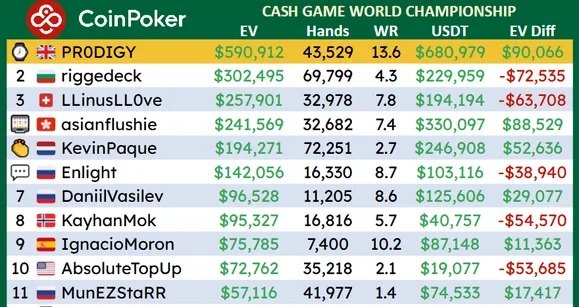
As a result, one of the biggest edges in high stakes cash games is deciding which games are worth playing in the first place.
A theoretically excellent player might have only a marginal advantage, or no advantage at all, in a lineup consisting entirely of elite professionals.
However, the arrival of a wealthy recreational player can change the expected profitability of that same game dramatically.
This creates an environment where patience, game availability, and the ability to evaluate opposition become important components of professional decision-making.
The high stakes online poker market is also increasingly fragmented, with action distributed across different poker platforms, private ecosystems, and specialized cash game formats.
For professionals, that fragmentation makes understanding liquidity, legal access, platform reliability, and game conditions particularly important.
Specialization offers another route to establishing an advantage.
Some high stakes professionals focus extensively on heads-up poker, while others become experts in deep-stacked six-max games or specific configurations that occur less frequently in standard training materials.
Unusual stack depths, uncommon bet sizes, and strategically complex three-bet or four-bet pots can create situations in which even strong regulars have limited practical experience.
A player who studies these situations more thoroughly than the competition may identify profitable deviations that are difficult for opponents to recognize or counter immediately.
Nevertheless, specialization has limitations. There must be enough playable volume in the chosen format for the edge to matter financially.
High stakes profitability also depends heavily on bankroll management and risk tolerance. A player can possess a genuine positive expectation while experiencing substantial downswings, particularly when relatively few tables are available.
Ultimately, successful high stakes players are not necessarily those who take the most aggressive lines or demonstrate the most sophisticated solver knowledge.
They are often the professionals who combine exceptional technical ability with carefully selected games, disciplined risk management, and a clear understanding of where their own advantage actually exists.
Rake, Rakeback, and Poker Room Ecology: The Hidden Edges Across Every Stake Level
Although strategic skill receives most of the attention, the financial structure of online poker can substantially influence a player's long-term results.
Rake, rakeback, promotional rewards, and player pool composition all affect whether an otherwise profitable strategy produces a meaningful return.
The impact is especially significant at smaller stakes, where rake can consume a substantial portion of a player's theoretical winnings.
Consider a player who wins 6 big blinds per 100 hands before rake but pays the equivalent of 7 big blinds per 100 hands in fees. Despite outperforming opponents before costs, that player would lose 1 big blind per 100 hands overall.
These figures are illustrative rather than estimates of any particular poker room, but they demonstrate why understanding effective rake is essential.
Rakeback can partially offset those costs, although advertised reward percentages do not always translate directly into equivalent cash returns.
Players should therefore evaluate the complete reward structure, including eligibility conditions, promotional restrictions, and how rewards are calculated.
An environment with comparatively high rake but significantly weaker opponents can still be more profitable than a lower-rake game filled with experienced regulars.
Likewise, a highly competitive player pool with attractive rewards may suit a volume-oriented professional better than a softer game offering fewer playable hands.
Security and fair-play policies introduce another important consideration.
As poker software has become more advanced, platforms have tightened restrictions on real-time assistance, automated decision-making, and prohibited third-party tools.
Many established online poker operators prohibit bots, unauthorized real-time assistance, and software that provides strategic advice during active hands. These restrictions mean players must carefully distinguish legitimate off-table study from tools that violate the rules of their chosen platform.
Poker room ecology should therefore be evaluated as a combination of opponent strength, rake, available games, software rules, security standards, and reliability.
The most profitable poker room is not automatically the one with the highest traffic, lowest advertised fees, or largest promotional rewards.
It is the environment where a particular player can consistently generate the highest sustainable return after accounting for all relevant costs and risks.
The Future of Online Cash Game Poker: Where Will the Next Edges Come From?
Looking ahead, the strongest opportunities in online cash game poker are likely to emerge from the intersection of theoretical knowledge, player pool analysis, and practical decision-making.
The widespread availability of solver technology has undoubtedly raised strategic standards. However, poker remains a game played by humans who differ in preparation, concentration, experience, emotional control, and willingness to adapt.
These differences ensure that exploitable mistakes can continue to exist even when theoretically sound strategies are widely available.
At micro stakes, the biggest edge is likely to remain fundamental exploitation: identifying players who call too frequently, making disciplined folds, and extracting maximum value from strong hands.
At low stakes, more sophisticated population analysis and effective game selection become increasingly important.
At mid stakes, detailed knowledge of turn and river strategies, accurate range construction, and the ability to detect subtle execution errors can separate profitable regulars from their competition.
At high stakes, specialized preparation and access to favorable games may matter just as much as technical superiority.
Across every level, however, one principle remains unchanged: poker profitability depends on making better decisions than the opposition after accounting for the cost of playing.
The ability to identify a genuine edge also requires intellectual discipline. Players must be willing to revise their assumptions when evidence contradicts them, rather than attributing every losing session to bad luck or every winning session to superior skill.
The strongest competitors will likely be those who use theoretical study as a foundation, investigate how real opponents deviate from that foundation, and adapt without becoming predictable themselves.
Online cash games in 2026 are certainly more sophisticated than they were during poker's earlier boom years, but that does not mean the opportunities have disappeared.
Instead, the market has become more selective.
Players looking for sustainable profits need to understand not only how to play strong poker, but also where that knowledge provides the greatest advantage.
The biggest edge in modern online cash game poker may ultimately be the ability to recognize which battles are profitable, which opponents are exploitable, and which strategic adjustments genuinely improve long-term expected value.
For players who approach the game with that mindset, profitable opportunities remain available from the smallest micro stakes tables to the highest levels of online competition.
If you are interested in reading how AI is changing the online poker, you can do it here.