Poker has always depended on personalities. Long before Twitch streams, YouTube channels and short-form social media, the game was promoted through recognizable professionals whose tournament results, table presence and personal stories helped transform poker from a card game into a spectator product. What has changed is not the existence of poker personalities, but the scale and structure of their influence.
Today, poker influencers, poker streamers and poker ambassadors occupy a position somewhere between professional player, entertainer, educator and marketing channel. A successful creator can introduce tens of thousands of people to online poker, normalize playing habits, explain strategy, promote poker rooms and influence how audiences perceive both winning and losing. This creates an important question for the modern poker industry: are influencers actually good for poker?
The answer is not as simple as measuring follower counts or affiliate registrations. From a behavioral and economic perspective, poker influencers can increase participation, improve knowledge transfer and make the game more accessible. At the same time, they can distort perceptions of profitability, encourage excessive risk-taking and blur the boundary between authentic content and commercial advertising.
To understand whether this development is positive, poker influencers should be examined as part of a larger ecosystem involving attention, trust, social learning, gambling psychology and the economics of player acquisition.
The Evolution of Influence in Poker
The modern poker influencer is an extension of a much older phenomenon. Professional players became recognizable public figures during the televised poker boom of the early 2000s, when tournaments such as the World Series of Poker began reaching mass audiences. Television introduced viewers not only to poker strategy but also to personalities, rivalries and recognizable playing styles.
The psychological mechanism was powerful. Humans tend to process complex activities more easily when they are represented through identifiable individuals. Instead of following abstract concepts such as expected value, bankroll management or tournament variance, viewers could follow particular players.
Social media intensified this effect.
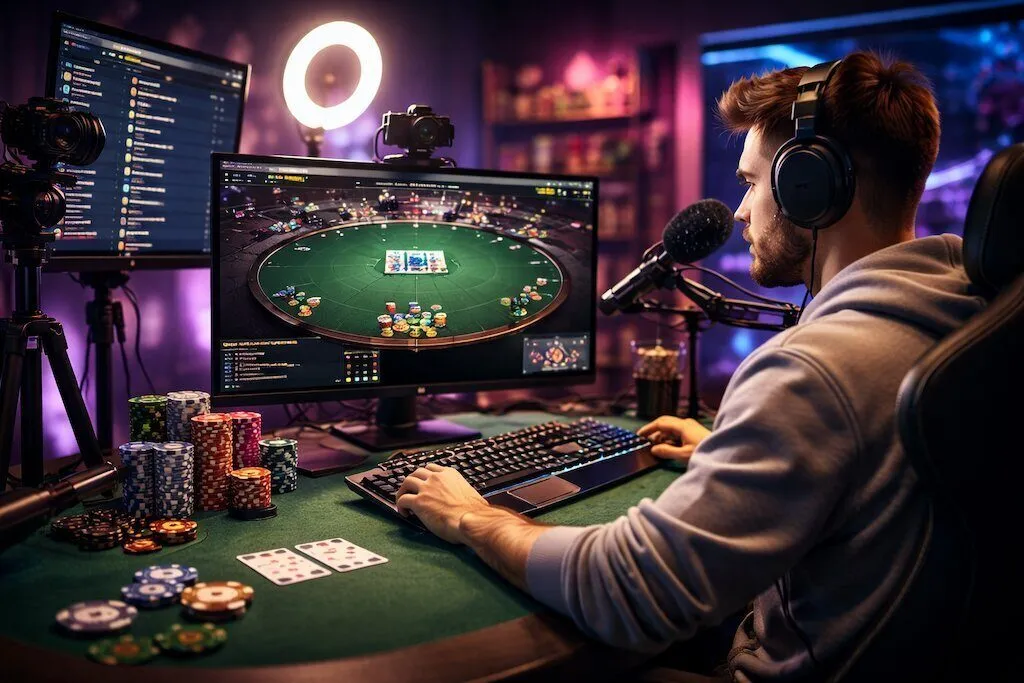
A poker streamer can now communicate directly with an audience for several hours per day. Viewers observe decision-making in real time, hear explanations of hands, witness emotional reactions and experience winning and losing sessions alongside the creator. This level of repeated exposure produces a relationship fundamentally different from traditional advertising.
In communication research, repeated exposure can increase familiarity and perceived credibility. In the context of poker, this means that a streamer recommending a tournament series or poker site may have substantially more persuasive power than a conventional advertisement.
This explains why poker operators increasingly invest in ambassadors and content creators. They are not merely purchasing visibility. They are borrowing trust.
The distinction between poker influencers, poker streamers and poker ambassadors is therefore becoming increasingly important. A streamer primarily produces content, an influencer may operate across several platforms, while an ambassador usually has a formal commercial relationship with a poker company. In practice, however, these roles often overlap.
A professional poker player may stream online tournaments, publish educational videos, promote sponsored events and simultaneously act as the public representative of an operator.
From a marketing perspective, this convergence is extremely efficient. From a consumer perspective, it can make commercial incentives harder to identify.
Why Poker Streamers Can Be Valuable for the Game
One of the strongest arguments in favor of poker streamers is their educational function.
Poker has a relatively high barrier to entry compared with many other forms of gambling. New players must understand hand rankings, betting structures, position, stack sizes, tournament formats and strategic concepts before they can participate confidently. For inexperienced players, this learning process can be intimidating.
Streaming dramatically reduces that barrier.
Watching an experienced player explain why a hand is folded, raised or called creates a form of observational learning. Instead of studying poker strategy exclusively through books or theoretical material, viewers can observe concepts in context.
This may contribute to a more informed player population.
If you are looking for a site to play poker and want a good rakeback deal, you should check out Champion Poker, as it offers flat rakeback of up to 30%.
Poker streamers also demonstrate something that traditional poker advertising often ignored: losing.
A professionally edited commercial typically focuses on excitement, victory and large prizes. A long poker stream is more difficult to sanitize. Even highly successful players experience losing sessions, tournament eliminations and extended periods without significant results.
When presented responsibly, this exposure can teach viewers about variance in poker, one of the most misunderstood aspects of the game.
A player can make mathematically correct decisions and still lose money over a particular session. Conversely, a poorly played hand can occasionally produce a large win. Understanding this distinction is essential because poker outcomes combine skill and randomness.
Streamers therefore have the potential to communicate poker more realistically than conventional marketing.
They can also make the game culturally accessible. Poker communities have historically been fragmented between casino players, online grinders, tournament professionals and recreational players. Content creators connect these groups by translating highly technical poker discussions into entertainment.
This has commercial benefits, but it also has social benefits for the poker ecosystem.
A game with no new participants eventually becomes increasingly difficult as weaker players disappear and the remaining player pool becomes more experienced. Recreational participation is therefore economically important to online poker rooms, casinos and professional players alike.
Influencers can act as an entry point for this new participation.
The Psychology of Poker Influencers and Parasocial Trust
The strongest advantage of influencer marketing is also potentially its greatest weakness: trust.
Audiences frequently develop what psychologists describe as parasocial relationships with media personalities. The relationship is one-sided, but repeated interaction can create a sense of familiarity. A viewer who watches a poker streamer several nights per week may gradually perceive that person less like a distant celebrity and more like a familiar member of a community.
This matters when financial behavior is involved.
Consider the difference between seeing an advertisement saying, “Play this poker tournament,” and hearing a favorite streamer say that the same tournament is exciting, profitable or worth trying.
The factual message may be similar. The psychological context is different.
Social proof increases when viewers see other members of the community participating. If hundreds of people in a stream chat discuss entering a tournament, depositing money or chasing a promotion, participation can begin to feel socially normal.
This is not automatically harmful. Social learning is responsible for spreading countless positive behaviors. The problem arises when the risks associated with poker receive less attention than the rewards.
Poker content naturally creates a selection effect.
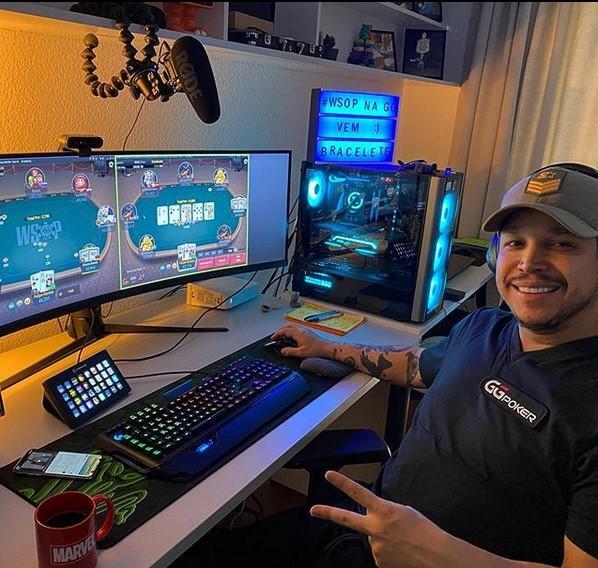
A dramatic tournament victory is more likely to become a YouTube highlight than twelve hours of unsuccessful play. A huge bluff is more likely to circulate on social media than fifty routine folds. A player winning six figures generates more engagement than a player quietly managing a modest bankroll.
Over time, audiences may therefore receive a statistically distorted picture of poker.
This phenomenon is similar to survivorship bias. Successful outcomes remain visible while unsuccessful outcomes disappear from the narrative.
The danger is particularly significant when creators present poker primarily as an income opportunity.
Professional poker is possible, but the distribution of outcomes is highly unequal. The existence of successful professionals does not imply that the average participant can reproduce those results. Skill differences, rake, tournament variance, emotional discipline, bankroll requirements and time investment all influence profitability.
Responsible poker influencers should therefore distinguish between entertainment, professional competition and realistic expectations of income.
Poker Ambassadors and the Conflict Between Authenticity and Advertising
Poker ambassadors introduce an additional layer of complexity because their relationship with an operator is explicitly commercial.
From the company’s perspective, the logic is straightforward. Traditional advertising can purchase impressions, but ambassadors can create credibility. A respected poker professional associated with a platform may signal that the company understands serious players.
The ambassador also gives the brand a human identity.
This strategy has been used extensively across online poker because poker customers tend to be unusually informed about the product they use. Players discuss tournament structures, software performance, rake, promotions, security and withdrawal procedures. Having experienced poker players represent a company can therefore improve communication between operators and customers.
However, the ambassador relationship becomes problematic when audiences cannot determine when an opinion is independent and when it is commercially motivated.
Imagine that a poker ambassador praises a new tournament format. The recommendation may be completely sincere. Yet the ambassador is also financially connected to the company operating the tournament.
This creates a conflict of interest whether or not the person is intentionally misleading anyone.
Transparency becomes essential.
Clearly disclosed sponsorship does not eliminate bias, but it allows audiences to evaluate information within the correct context. Problems arise when affiliate relationships, promotional arrangements or operator contracts are presented ambiguously.
The poker industry should be especially careful because the promoted product involves real financial risk.
Advertising a pair of headphones and advertising a gambling product are not behaviorally equivalent. A disappointing consumer product normally produces a fixed financial loss. Poker allows repeated financial decisions, potentially under emotional pressure.
Consequently, the ethical standard for poker ambassador marketing should arguably be higher than the standard applied to many ordinary consumer products.
Do Influencers Encourage Healthier Poker or More Gambling?
Whether influencers are good for poker ultimately depends on which behaviors they normalize.
A creator who regularly discusses bankroll management, game selection, variance and responsible limits can provide meaningful risk education. Such information may be more persuasive coming from a respected player than from a generic responsible gambling advertisement.
For example, professional poker players understand that bankroll management is not merely financial conservatism. It is a mathematical response to variance.
Even a player with a measurable skill advantage can experience substantial downswings. Maintaining sufficient capital reduces the probability that normal statistical variation will eliminate the player’s ability to continue.
When streamers explain this concept, they indirectly challenge one of the most dangerous gambling beliefs: the idea that short-term losses must immediately be recovered.
The opposite behavior can also occur.
Streaming environments reward excitement. Large pots, ambitious bluffs, expensive tournaments and emotional reactions generate attention. Conservative decisions are strategically important but usually less entertaining.
This produces an incentive mismatch.
What is good for content is not always what is good for poker decision-making.
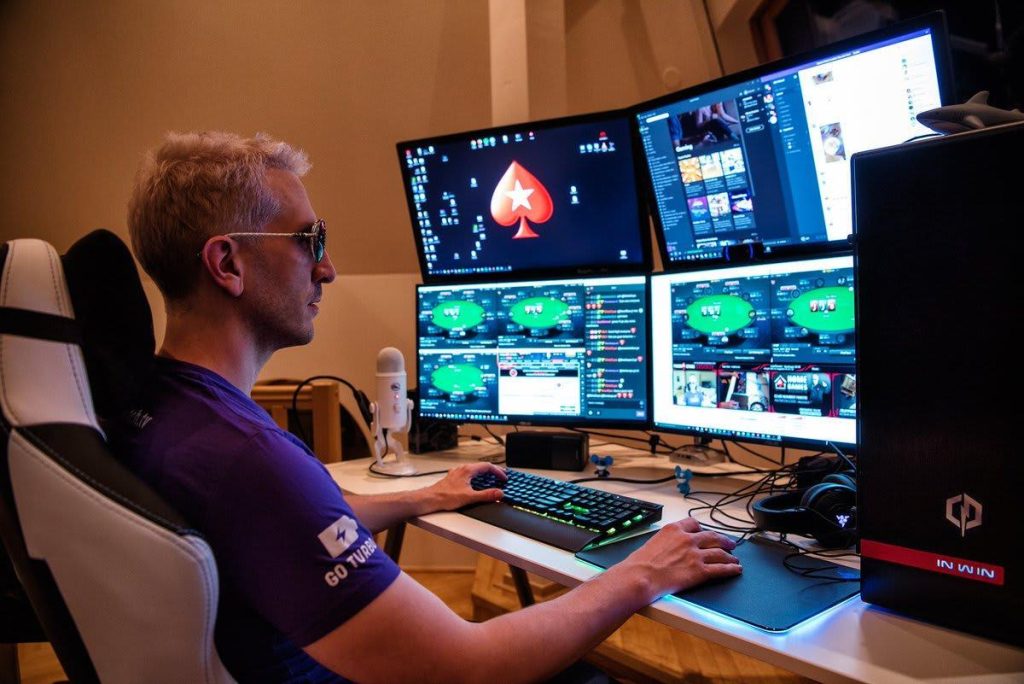
Creators may feel pressure to enter bigger games, take unusual lines or participate in increasingly expensive tournaments because those decisions produce stronger audience engagement. Viewers may then imitate behavior without possessing the bankroll, skill or sponsorship arrangements of the streamer.
There is also an important difference between the financial exposure of an ambassador and that of an ordinary viewer.
A sponsored professional may receive tournament entries, rake incentives, travel support or other commercial compensation. The viewer generally does not.
Two people can therefore appear to participate in the same poker ecosystem while facing very different economic risks.
Responsible content should make these differences visible.
The strongest poker influencers are arguably those who preserve the entertainment value of the game without creating an illusion that financial success is easy, predictable or universally achievable.
Are Poker Influencers Good for Poker? The Evidence Suggests It Depends
From an industry perspective, poker influencers are almost certainly valuable. They generate attention, create communities, attract recreational players and provide operators with highly targeted marketing channels.
From the perspective of the game itself, the effect is also potentially positive.
Poker benefits when more people understand its strategic depth. Streaming allows audiences to observe probability, decision theory, psychology and risk management in action. High-quality content can demonstrate that successful poker requires considerably more than simply receiving good cards.
Influencers can also make professional poker more transparent. Audiences can watch thousands of hands rather than seeing only television highlights. They can observe losing periods, mistakes and strategic discussions that were largely invisible during earlier eras of poker media.
However, the benefits depend heavily on incentives and disclosure.
When content becomes excessively promotional, influencers risk transforming poker education into disguised player acquisition. When extreme wins receive constant attention while losses remain invisible, audiences may develop unrealistic expectations. When sponsored professionals fail to explain their commercial relationships, trust can become a mechanism for persuasion rather than education.
The important question is therefore not whether poker should have influencers.
They are already a structural part of modern poker.
The more useful question is what kind of poker influencer ecosystem the industry wants to create.
A sustainable model would reward creators who combine entertainment with transparency. Sponsorships should be clearly disclosed. Financial outcomes should be presented with appropriate context. Bankroll management and variance should be discussed openly. Operators should avoid encouraging ambassadors to portray poker as an effortless path to income.
Such standards would not make poker less entertaining. They could make the industry more credible.
Poker has survived for generations because it contains a combination of mathematics, competition, uncertainty and human psychology that remains intellectually compelling. Influencers and streamers can communicate those characteristics more effectively than almost any previous form of poker media.
Used responsibly, they can bring new players into the game, improve poker education and create communities that strengthen both online poker and live poker.
Used irresponsibly, the same influence can exaggerate winnings, normalize financial risk and convert personal trust into a powerful gambling advertisement.
So, are poker influencers, streamers and ambassadors good for poker?
The most accurate answer is conditional.
Influence itself is neither positive nor negative. Its effect depends on what behavior receives attention, what information is disclosed and whether audiences are treated primarily as members of a poker community or simply as potential deposits.
For the long-term health of the poker industry, that distinction may prove far more important than follower counts, streaming hours or sponsorship contracts.
If you want to know which poker formats are the most profitable, you can read about it in the article here.