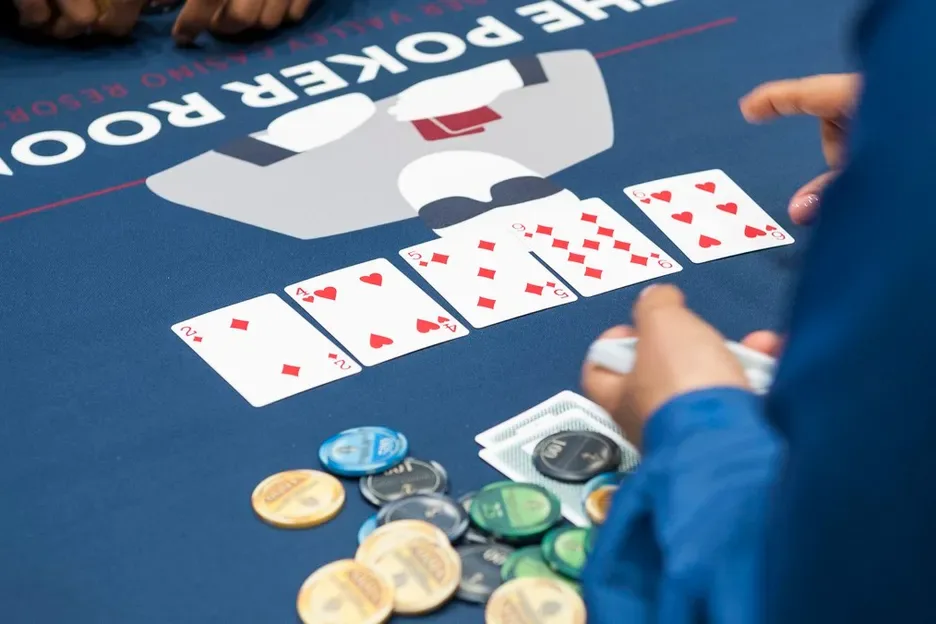
Squeezing and 4-bet bluffing are among the most frequently misunderstood forms of preflop aggression in poker cash games. Both actions generate fold equity by applying pressure to ranges that may be unable to continue profitably, yet their effectiveness depends less on the intrinsic strength of a particular hand than on the behavior of the player pool. A theoretically sound bluff can lose money against opponents who call too frequently, while an unconventional bluff may become highly profitable against a field that overfolds.
The central question is therefore not simply whether a hand belongs in a solver-approved squeezing or 4-betting range. It is whether the conditions that make the bluff profitable are present at the table. Stack depth, rake, position, opening ranges, 3-bet frequencies, and postflop skill all influence the expected value of aggression. Most importantly, these variables change across stakes and between different cash-game environments.

This article examines squeezing and 4-bet bluffing through the framework of expected value and population tendencies. It focuses primarily on 100-big-blind, six-max No-Limit Hold’em cash games, while recognizing that live games, deep-stacked tables, and different rake structures can produce substantially different strategic incentives.
The Mathematical Foundations of Squeezing and 4-Bet Bluffing
A squeeze occurs when a player makes a 3-bet after an initial raise and at least one caller. For example, the cutoff opens to 2.5 big blinds, the button calls, and the big blind raises to 13 big blinds. The squeeze attacks both the original raiser and the caller, seeking to win the accumulated dead money or isolate a weaker range.
A 4-bet bluff is a re-raise against a 3-bet with a hand that is not primarily seeking to get all-in for value. If the cutoff opens, the button 3-bets, and the cutoff 4-bets with a hand such as A5s, the action may function as a bluff or semi-bluff depending on the ranges, stack depth, and opponent.
Suppose a player risks 13 big blinds to win a pot of 6.5 big blinds. Ignoring all postflop and showdown value, the bluff requires opponents to fold approximately 66.7% of the time. In practice, a squeeze with a playable hand retains equity when called, so the necessary immediate fold frequency is lower. However, multiway calling, poor position, and rake can reduce the value of that retained equity.
The same calculation applies to a 4-bet bluff. If a player has already opened to 2.5 big blinds and faces a 3-bet to 9 big blinds, raising to 22 big blinds risks an additional 19.5 big blinds to win the existing pot. The exact break-even threshold depends on the blinds and any dead money, but the strategic principle is constant: larger 4-bets need more folds, whereas smaller 4-bets offer opponents a better price to continue.
These equations are useful, but they do not fully describe poker decisions. A complete expected-value model must include the probability of each opponent folding, calling, or raising, alongside the equity realization of the bluffing hand. Squeezing is particularly sensitive to this distinction because the original raiser and caller do not respond independently. A recreational player who cold-calls too widely may also call the squeeze too widely, changing the profitability of the entire play.
Why Field Tendencies Matter More Than a Static Preflop Chart
Game-theoretic optimal strategy provides a valuable baseline for understanding which hands can bluff and how frequently aggression should occur. Solvers typically select bluffing candidates using a combination of blockers, equity, playability, and range construction. A suited wheel ace, for example, blocks some premium ace combinations while retaining straight and flush potential when called.
Nevertheless, equilibrium strategy assumes that opponents respond according to defined ranges. Real cash-game populations deviate from those assumptions in systematic ways. Some players 3-bet almost exclusively for value, some call too many squeezes, and others defend so tightly against 4-bets that they surrender profitable opportunities.
A useful population analysis separates three behavioral variables. The first is the width of the opening or 3-betting range. The second is the frequency with which that range continues against aggression. The third is the quality of the opponent’s postflop decisions after calling. A player can have a wide opening range but still be a poor squeezing target if they call 3-bets excessively and play well postflop.
The most important distinction is between range weakness and folding tendency. A weak range does not automatically produce a profitable bluff. If an opponent opens too many hands but refuses to fold them, the correct adjustment may be to widen the value range rather than increase bluff frequency. Conversely, a relatively strong range can sometimes be attacked if its owner folds an excessive proportion of it to a particular raise size.
Field tendencies should also be treated as empirical hypotheses rather than universal laws. Online regulars at the same nominal stakes may behave differently across poker sites, regions, formats, and time periods. Anonymous pools, fast-fold games, private cash games, and live casino tables all create different incentives. Reliable decisions therefore require local observations, meaningful database samples where permitted, and attention to the specific players involved.
Rake is another essential variable. At low stakes, high proportional rake reduces the profitability of marginal postflop situations and can make speculative calls less attractive. This may increase the relative appeal of winning pots preflop, but it does not justify indiscriminate bluffing. If the field responds by calling too widely, the rake burden can make marginal bluffing hands perform even worse.
Squeezing in Micro-Stakes and Small-Stakes Cash Games
At micro-stakes cash games, such as NL2, NL5, NL10, and often NL25, the most common strategic error is to assume that every cold-caller represents dead money. In many recreational-heavy pools, cold-calling ranges are wide, but they are not necessarily willing to fold to a squeeze. Players may call with small pocket pairs, suited connectors, broadway hands, and dominated aces because they want to see a flop.
Against this type of field, squeezing should generally be more value-oriented. Hands such as QQ, KK, AA, AK, and frequently JJ or AQ can benefit substantially from increasing the pot against weaker calling ranges. The exact value threshold depends on position and opponents, but the principle is that a player who calls too many hands creates opportunities for value extraction rather than automatic bluffing.
Consider a live or online low-stakes table where a middle-position player opens, two recreational players call, and the hero is in the small blind. A large squeeze with A5s may appear attractive because of the dead money. Yet if both callers frequently continue and the opener rarely folds, the hero may enter a large multiway pot out of position with a hand that realizes equity poorly. The presence of dead money is not sufficient to overcome this disadvantage.
Squeezing becomes more attractive when the initial raiser opens too widely and the caller is demonstrably weak or capped. A button cold-call against a cutoff open, for instance, may contain many hands that are unwilling to continue against a substantial big-blind squeeze. If the original raiser also folds frequently to 3-bets, the combined fold equity can be significant.
If you are looking for a site to play poker and want a good rakeback deal, you should check out Champion Poker, as it offers flat rakeback of up to 30%.
The distinction between online and live low-stakes games is particularly important. Live $1/$2 and $1/$3 games often feature large opening sizes, multiple callers, and relatively inelastic calling ranges. In such environments, squeezing with a polarized bluff-heavy range can be ineffective, while larger linear value squeezes may perform exceptionally well. Some live tables are tighter and more raise-sensitive, but this should be established through observation rather than assumed from the stake.
At NL25 and NL50, many online pools contain a greater proportion of regulars who understand the positional disadvantage of cold-calling and the pressure created by squeezes. This can improve bluffing opportunities, especially from the blinds against late-position opens and calls. However, the presence of more competent players also means that obvious squeeze spots may be defended more accurately. The correct adjustment is to identify which configurations actually generate excessive folds rather than simply increasing aggression as the stakes rise.
4-Bet Bluffing: When It Becomes Profitable and When It Fails
The profitability of a 4-bet bluff depends primarily on the opponent’s 3-betting range and their response to a 4-bet. A player who 3-bets frequently but continues only with a narrow range is an attractive target. A player who 3-bets rarely and primarily with premium hands is usually not.
At micro-stakes, a common population tendency is that many recreational players and passive regulars have tight 3-betting ranges. Against an opponent who 3-bets only a small, value-heavy selection of hands, a 4-bet bluff has limited fold equity because the starting range is already concentrated around hands capable of continuing. In these situations, folding marginal opens or 4-betting for value is often preferable to constructing an elaborate bluffing range.
At the same time, some micro-stakes regulars display a different leak: they 3-bet aggressively from the blinds but fold too often when facing a 4-bet. Against such players, selective 4-bet bluffing can be highly effective. The relevant evidence is not the stake itself, but the relationship between their 3-bet frequency and 4-bet defense.
A typical bluffing candidate is A5s or A4s because these hands block AA and AK combinations while retaining some equity when called. However, blockers should not be treated as a substitute for fold equity. An ace blocker is valuable only to the extent that it removes combinations from an opponent’s relevant continuing range. If an opponent calls 4-bets with a wide range of pairs and broadway hands, the blocker advantage may be insufficient.
At NL50 and NL100, online players are more likely to encounter regulars with developed 3-betting strategies and positional 4-bet ranges. This creates more opportunities for balanced or exploitative 4-bet bluffing, particularly in late-position confrontations. A button 3-betting a cutoff open may have a substantially wider range than an early-position player 3-betting an under-the-gun open, making the former configuration a more natural bluffing candidate.
At NL200 and above, the strategic environment often becomes more dynamic. Regulars may adjust to each other’s frequencies, defend 4-bets more efficiently, and use 5-bet jams or calls to punish excessive aggression. Bluffing remains essential in many configurations, but its profitability increasingly depends on precise range construction, opponent-specific information, and avoiding predictable frequencies.
Live cash games present a different picture. At many $1/$2 and $2/$5 tables, 3-bets are relatively value-heavy, especially from passive players and early positions. A 4-bet bluff against such a range may have little chance of success. At tougher $5/$10 and higher-stakes live games, wider 3-betting ranges and more sophisticated preflop dynamics can make 4-bet bluffing more relevant. These are broad tendencies, not fixed rules: a loose $2/$5 professional may be a better bluffing target than a tight $10/$20 recreational player.
Position, Stack Depth, and the Difference Between Theory and Exploitation
Position changes the expected value of both squeezing and 4-bet bluffing because it affects range strength and postflop equity realization. A squeeze from the big blind against a cutoff open and button call is strategically different from a squeeze from the small blind against an under-the-gun open and middle-position call. The latter configuration generally involves stronger ranges and a more difficult postflop environment.
Late-position confrontations tend to create more bluffing opportunities because opening and 3-betting ranges are wider. A cutoff versus button 4-bet battle can therefore support more bluffs than an under-the-gun versus early-position confrontation. Nevertheless, a late-position range is not automatically weak; competent opponents may defend aggressively against predictable attacks.
Stack depth also alters the value of bluffing hands. At 100 big blinds, a 4-bet to approximately 20–25 big blinds can create a low stack-to-pot ratio when called. At 200 big blinds, the same raise leaves considerably more postflop maneuverability, and hands with strong nut potential may gain value. Deep stacks can improve the playability of suited aces in some situations, but they also increase the cost of making large mistakes against strong ranges.
Shorter stacks create different constraints. With 40–60 big blinds effective, a non-all-in 4-bet may commit a substantial portion of the stack, and the distinction between a bluff and a value raise becomes less straightforward. In these situations, players should analyze the entire preflop decision tree, including the opponent’s 5-bet jam frequency and the equity of a potential call, rather than applying standard 100-big-blind ranges.
The choice between a linear and polarized squeezing range is similarly dependent on field behavior. A linear range contains many strong and medium-strong hands that perform well against callers, whereas a polarized range combines premium hands with selected bluffs. Against opponents who call too widely, a linear, value-heavy approach often captures more expected value. Against opponents who overfold, adding carefully chosen bluffs becomes more attractive.
Exploitative strategy does not mean abandoning theory. It means using theoretical principles to identify the direction of an adjustment. If an opponent folds more than equilibrium to 4-bets, bluffing frequency can increase. If they call too much, bluff frequency should decrease and value thresholds may widen. The magnitude of the adjustment should reflect the quality of the evidence and the potential cost of being wrong.
A Practical Framework for Identifying Profitable Aggression
The most effective way to evaluate a squeeze or 4-bet bluff is to begin with the specific preflop configuration rather than the hand. The first consideration is whether the opponent’s range is wide enough to contain a meaningful folding portion. The second is whether that player actually folds the relevant hands. The third is whether the hero’s hand has suitable blockers or postflop properties when the bluff is called.
For squeezing, the cold-caller’s tendencies deserve particular attention. A caller who enters too many pots and folds to large raises can create substantial dead-money opportunities. A caller who enters too many pots and refuses to fold instead creates a value opportunity. The original raiser’s response must be considered simultaneously, because a tight opener who frequently continues can neutralize the apparent weakness of the cold-caller.
For 4-bet bluffing, the most useful indicators are positional 3-bet frequency, fold-to-4-bet behavior, 5-bet jam frequency, and the hands shown down after preflop confrontations. Heads-up displays and database statistics can help where their use is permitted, but small samples should not be overinterpreted. A player who has folded to three consecutive 4-bets is not necessarily an overfolder; the observed hands may simply have been unsuitable for continuing.
Population reads can provide a starting hypothesis, but individual evidence should gradually replace it. At an unknown micro-stakes table, a conservative assumption about 3-bet ranges may be reasonable. Once a player demonstrates frequent light 3-betting and excessive folding, the strategy should adapt. Similarly, a supposedly tough high-stakes regular may have a specific positional leak that supports targeted exploitation.
The most important practical conclusion is that squeezing and 4-bet bluffing should not be assigned fixed stakes at which they suddenly become profitable. At NL2, a bluff can be excellent against a habitual overfolder. At NL500, the same bluff can be disastrous against a player who defends correctly or adjusts aggressively. Stakes influence the distribution of player types, but the actual decision is determined by ranges, frequencies, and expected value.
A disciplined cash-game strategy therefore treats aggression as a response to measurable conditions. Squeeze more often when the opener and callers create genuine fold equity; squeeze for value when they call too widely. 4-bet bluff against wide 3-bettors who surrender too much of their range; avoid bluffing into narrow, value-heavy 3-bets. As competition becomes tougher, incorporate more balanced ranges and refined blocker selection, while continuing to exploit clear population deviations.
The scientific approach to poker is not to memorize a universal chart and apply it mechanically. It is to formulate a hypothesis about the field, estimate the expected value of the available actions, collect evidence, and update the strategy. Squeezing and 4-bet bluffing become powerful not because aggression is inherently profitable, but because correctly targeted aggression converts predictable opponent behavior into measurable long-term advantage.
If you want to learn more about deal making at the final table of MTT you can read our article about it here.