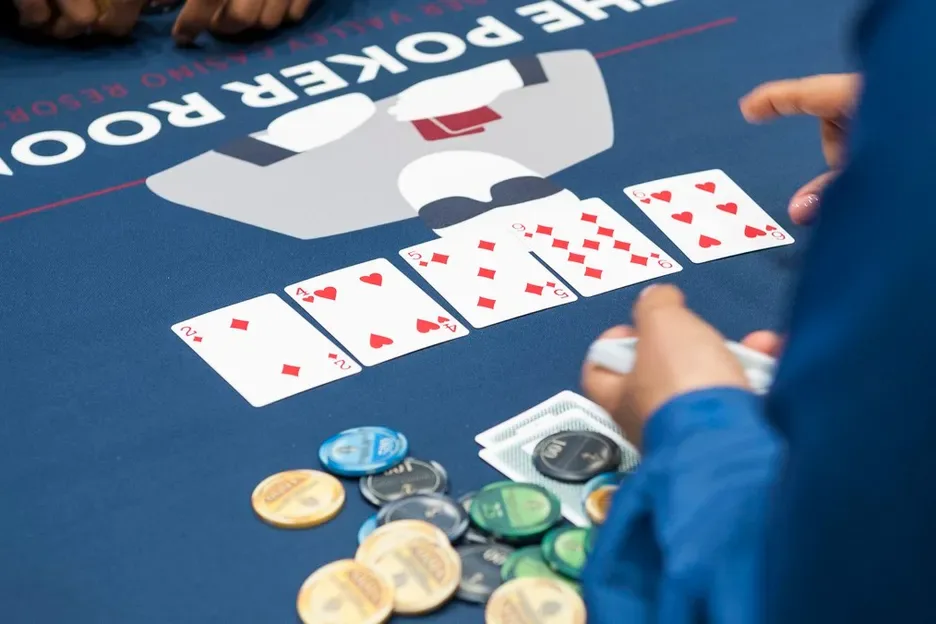
Poker is often described as a game of incomplete information, but that definition becomes most accurate on the river. By the time the final community card is dealt, no additional cards remain to alter the strength of either player’s hand. Equity has effectively collapsed into a binary state: a hand is either ahead or behind. What remains is a decision-making problem involving ranges, probability, bet sizing, incentives, and human behavior.
This is precisely why river bluffing in poker deserves more attention than almost any other strategic concept. Preflop and flop decisions determine which hands enter a pot, while turn strategy shapes the ranges that survive into the final betting round. The river, however, is where those accumulated decisions are converted into money.

For strong players, river aggression is not simply an attempt to make opponents fold. It is a mathematical mechanism for extracting value from the structure of a range. A correctly constructed river betting strategy forces opponents to defend with uncomfortable bluff-catchers, prevents passive players from realizing too much showdown value, and allows hands with zero chance of winning at showdown to generate positive expected value.
In practical terms, the river is where poker becomes less about the cards themselves and more about the information those cards represent.
The River as a Final Information State
The strategic properties of the river are fundamentally different from those of earlier streets.
On the flop, a player holding a draw may have significant future equity. A bluff can succeed immediately while still possessing a secondary path to victory by improving on the turn or river. These bets are often called semi-bluffs because their profitability is divided between fold equity and the probability of eventually making the best hand.
On the river, that second mechanism disappears.
A missed draw has no future cards available. If checked to showdown, it either wins against an even weaker hand or loses. In many situations, the probability of winning naturally is approximately zero. This makes river bluffing theoretically cleaner than bluffing on earlier streets.
The expected value of a pure river bluff can be simplified as:
EV = Probability of Fold × Pot Won − Probability of Call × Amount Risked
Suppose the pot contains $100 and a player bluffs $75. If the opponent folds, the bettor wins the existing $100. If called, the bettor loses the $75 wager.
The break-even fold frequency is therefore:
$75 / ($100 + $75) = 42.9%
If the opponent folds more than approximately 42.9% of the time, the bluff generates immediate profit. If the opponent folds less frequently, the bluff loses money unless some unusual chance of winning at showdown remains.
This equation illustrates one of the most important principles of river poker strategy: a bluff does not need to work most of the time to be profitable.
The necessary success rate depends on the size of the bet relative to the pot.
Consequently, river aggression is not primarily an emotional act of courage. It is an exercise in probability estimation. The player is effectively asking whether the opponent’s range contains enough hands that cannot profitably continue against a particular bet size.
Why River Aggression Has Disproportionate Strategic Value
Aggression matters on every street, but river aggression has an unusually direct relationship with expected value because the pot is normally largest on the final betting round.
Consider the compounding structure of a no-limit hold’em hand. A small preflop investment produces a larger flop pot. Flop betting increases the amount available on the turn, and turn betting can create a substantial river pot.
As a result, a decision worth only a few big blinds preflop can eventually produce a river decision worth dozens or even hundreds of big blinds.
This produces an asymmetry in strategic importance. A player may execute technically sophisticated preflop ranges and competent flop continuation-betting strategies yet still surrender a large percentage of potential profit by becoming passive on the river.
The reason is straightforward.
When a player checks back a missed draw that could have profitably bluffed, the value of the hand remains zero. When the same player identifies an opponent whose range contains enough bluff-catchers and applies a mathematically appropriate river bet, the hand can suddenly produce substantial positive expected value.
If you are looking for a site to play poker and want a good rakeback deal, you should check out Champion Poker, as it offers flat rakeback of up to 30%.
River aggression therefore acts as a form of equity conversion. Hands that possess no showdown value are converted into profitable betting candidates by leveraging fold equity.
This principle becomes particularly important at tougher stakes, where opponents do not routinely donate large pots with weak hands. Against competent players, winning poker increasingly depends on extracting thin value and finding enough bluffs to prevent one’s betting range from becoming transparent.
A player who only bets the river with strong hands creates an exploitable pattern. Observant opponents can simply fold their medium-strength holdings.
Aggressive river strategy solves this problem. When strong value hands are accompanied by carefully selected bluffs, opponents face a genuine statistical dilemma. Folding too frequently allows the bluffs to profit automatically. Calling too frequently allows the value portion of the betting range to extract excessive money.
That tension is one of the central mechanisms behind balanced poker strategy.
Bluffing the River Is a Range Problem, Not a Hand Problem
One of the most common mistakes in poker is evaluating a river bluff by looking only at the bettor’s two hole cards.
A player might think, “I missed my flush draw, so I should bluff.”
That reasoning is incomplete.
The relevant question is not merely whether the current hand is weak. The player must evaluate the complete interaction between both ranges.
The first consideration is range advantage: which player is more likely to hold strong hands given the actions taken on previous streets?
The second is nut advantage: which player contains more combinations of the strongest possible hands?
These concepts are related but not identical.
Imagine a river card that completes a highly visible straight draw. If the aggressor’s previous betting range contains many combinations capable of making that straight while the caller’s range contains comparatively few, the river may strongly favor continued aggression.
The bettor can represent the strongest hands credibly because those hands logically exist within the range.
By contrast, attempting a massive river bluff on a card that strongly improves the opponent’s range can be strategically disastrous. Even if the bettor personally holds a weak hand, the opponent may simply possess too many combinations capable of calling.
This is where scientific-style reasoning becomes useful. Poker strategy is fundamentally conditional.
The probability that an opponent holds a particular hand is not fixed. It changes after every action.
A player calls preflop. Information is updated.
The player calls the flop. Information is updated again.
The player calls a large turn bet. The remaining range becomes narrower still.
By the river, strategic reasoning resembles Bayesian inference. Each previous action modifies the probability distribution of possible holdings. The strongest river players continually update that distribution rather than treating every street independently.
Effective river bluffing therefore requires reconstructing the opponent’s surviving range and determining how much of it can withstand pressure.
Blockers and the Combinatorial Science of the River Bluff
Not all missed draws are equally good bluffing candidates.
Modern poker strategy places significant emphasis on blockers, because a player’s hole cards influence which combinations the opponent can possess.
Suppose a river completes a flush and a player is considering a large bluff. Holding the ace of the relevant suit may dramatically increase the attractiveness of the bluff, even if the player does not personally have a flush.
Why?
Because the ace removes possible nut-flush combinations from the opponent’s range.
This is a combinatorial effect.
There are only four cards of each rank and thirteen cards of each suit. If one important card is visible in the bettor’s hand, it cannot simultaneously exist in the opponent’s hand.
At first glance, removing one card may seem insignificant. At the river, however, ranges may have narrowed to a relatively small number of plausible combinations. Eliminating several of the opponent’s strongest calling hands can materially change the success rate of a bluff.
Good blockers generally remove hands that would call while leaving hands that would fold available.
Poor blockers do the opposite.
For example, suppose an opponent reaches the river with both missed draws and medium-strength made hands. A bluff candidate that blocks the missed draws may actually be undesirable. Those missed draws are precisely the hands the bettor wants the opponent to have because they are likely to fold.
By blocking them, the bettor increases the relative proportion of stronger hands in the opponent’s remaining range.
This counterintuitive principle explains why river bluffing cannot be reduced to “bet your weakest hands.”
Two hands may have identical showdown value but radically different strategic properties because they interact differently with the opponent’s range.
The best river bluff may therefore be a hand that looks slightly stronger in absolute terms but possesses superior blocker characteristics.
This is one reason advanced river strategy often appears unusual to inexperienced players. The decision is based not only on what a player holds, but also on what those cards make less likely for the opponent to hold.
Bet Sizing Changes the Biology of the Decision
River aggression becomes considerably more powerful when combined with intelligent bet sizing.
A small river bet and a two-times-pot overbet are not simply stronger and weaker versions of the same action. They create different strategic environments.
Consider a pot of $100.
A $50 bluff needs to succeed approximately 33.3% of the time to break even.
A $100 pot-sized bluff needs to succeed 50% of the time.
A $200 overbet requires the opponent to fold approximately 66.7% of the time.
Larger bluffs therefore require more fold equity, but they also place substantially more pressure on the middle portion of an opponent’s range.
This is where polarization becomes critical.
A polarized river range consists primarily of very strong value hands and bluffs. Medium-strength hands are often checked because they are neither strong enough to value bet for a large size nor weak enough to require bluffing.
Large river bets naturally fit polarized ranges.
If a player can credibly represent straights, flushes, full houses, or other near-nut holdings while the opponent is capped at bluff-catchers, an overbet can become extremely effective.
The opponent’s decision is psychologically difficult, but the underlying mechanism is mathematical. A larger bet offers worse pot odds, forcing the defender to call only with a narrower portion of the range.
This relationship between sizing and defense frequency explains why sophisticated river aggression can generate enormous pressure without relying on psychological intimidation.
The bet itself changes the opponent’s decision threshold.
Strong river players therefore do not ask only, “Should I bluff?”
They ask, “Which size generates the highest expected value against this exact range?”
That distinction separates random aggression from strategically controlled aggression.
Why Most Players Do Not Bluff the River Enough
Despite the mathematical importance of river aggression, many recreational and intermediate players systematically under-bluff.
The explanation is partly psychological.
Humans are naturally sensitive to immediate, visible losses. A failed river bluff is emotionally salient. The bettor places a large quantity of chips into the pot, gets called, reveals a weak hand, and loses.
The alternative error is much less visible.
Suppose the same player checks behind instead of bluffing. The opponent reveals a mediocre pair and wins the pot. Nothing dramatic happens. The player rarely experiences the lost opportunity as intensely as the failed bluff.
Yet both outcomes affect expected value.
A missed profitable bluff is economically equivalent to giving up money, even though no additional chips visibly leave the stack.
This creates a behavioral bias toward passivity.
Players may also fear embarrassment. Getting caught bluffing produces social information: everyone at the table sees that the player bet without a strong hand. In live poker particularly, this can create emotional resistance to aggressive river play.

From a strategic perspective, however, being caught bluffing is not evidence that the bluff was incorrect.
If a $100 bluff into a $100 pot needs to work 50% of the time, the bettor should expect to be called frequently even when executing the strategy perfectly.
A theoretically sound bluffing strategy must lose sometimes.
In fact, a player whose river bluffs are almost never called may not necessarily be highly skilled. The player may simply be bluffing far too rarely and selecting only situations where opponents massively over-fold.
Successful poker requires separating decision quality from short-term outcomes.
The relevant question after being called is not, “Did the bluff fail?”
It is, “Given the ranges, blockers, sizing, and expected folding frequency, did the bluff have positive expected value?”
That analytical distinction is essential.
River Aggression as the Final Expression of Poker Skill
The river is where the architecture of an entire poker hand becomes visible.
Preflop ranges determine which combinations begin the process. Flop decisions filter those combinations. Turn actions narrow them further. The river represents the final dataset.
There are no future cards to rescue an incorrect decision.
For this reason, river aggression may be the most important form of aggression in poker. It operates in the largest pots, converts worthless hands into potential profit, maximizes the return from strong value hands, and prevents opponents from exploiting overly predictable betting ranges.
The most effective river bluffing strategy is not based on fearlessness. Nor is it based on attempting spectacular bluffs simply because a hand has been missed.
It is based on structured inference.
A strong player evaluates which range contains the nut advantage, which combinations reach the river, which hands block calls, which hands unblock folds, what bet size creates the correct pressure, and what percentage of the opponent’s range must fold for the wager to become profitable.
Once poker is viewed through this framework, river aggression stops looking reckless.
It becomes a logical consequence of the mathematics of incomplete information.
The paradox of river poker is that the street with no remaining card equity often provides the greatest opportunity to manufacture value. A missed draw may be objectively worthless at showdown, yet strategically valuable as a bluff. A marginal pair may be insufficient for a value bet but ideal for checking. A single blocker may alter the profitability of an enormous wager.
These decisions are why the river separates competent poker players from exceptional ones.
Players who avoid difficult river bets can still win in soft games, particularly when opponents make substantial errors on earlier streets. But as competition improves, passive river strategy creates an increasingly severe ceiling on profitability.
The player who learns to attack capped ranges, identify credible value regions, select bluffs through card removal, and use polarized sizing gains access to an additional source of expected value that passive opponents simply leave untouched.
Ultimately, bluffing on the river is not about convincing an opponent that you have a good hand.
It is about constructing a situation in which the opponent cannot profitably defend enough of their range.
That is a much more precise objective.
And it explains why river aggression is not merely one weapon among many in no-limit hold’em. It is the final expression of everything that happened before it: range construction, information processing, combinatorics, probability, bet sizing, and psychological discipline.
When the river arrives, the cards stop changing.
The strategy does not.
What is your opinion on poker influencers and ambassadors, are they good for the game? Read more about it here!