The Bad Beat Jackpot has become a regular feature on many online poker sites and live poker rooms. It is designed to attract more players to chase it, as everybody is going to get lucky as long as they play enough hands, or at least they should on average.
A peculiar aspect of it is that not all players are aware that they are paying an additional fee/rake that contributes to the bad beat jackpot prize pool, which is what makes it a valuable free marketing tool for poker rooms.
I don’t see anything wrong with the bad beat jackpot, as it benefits the poker ecosystem and attracts more recreational players to the tables, which are the core of the poker economy.
How Often Does It Happen?
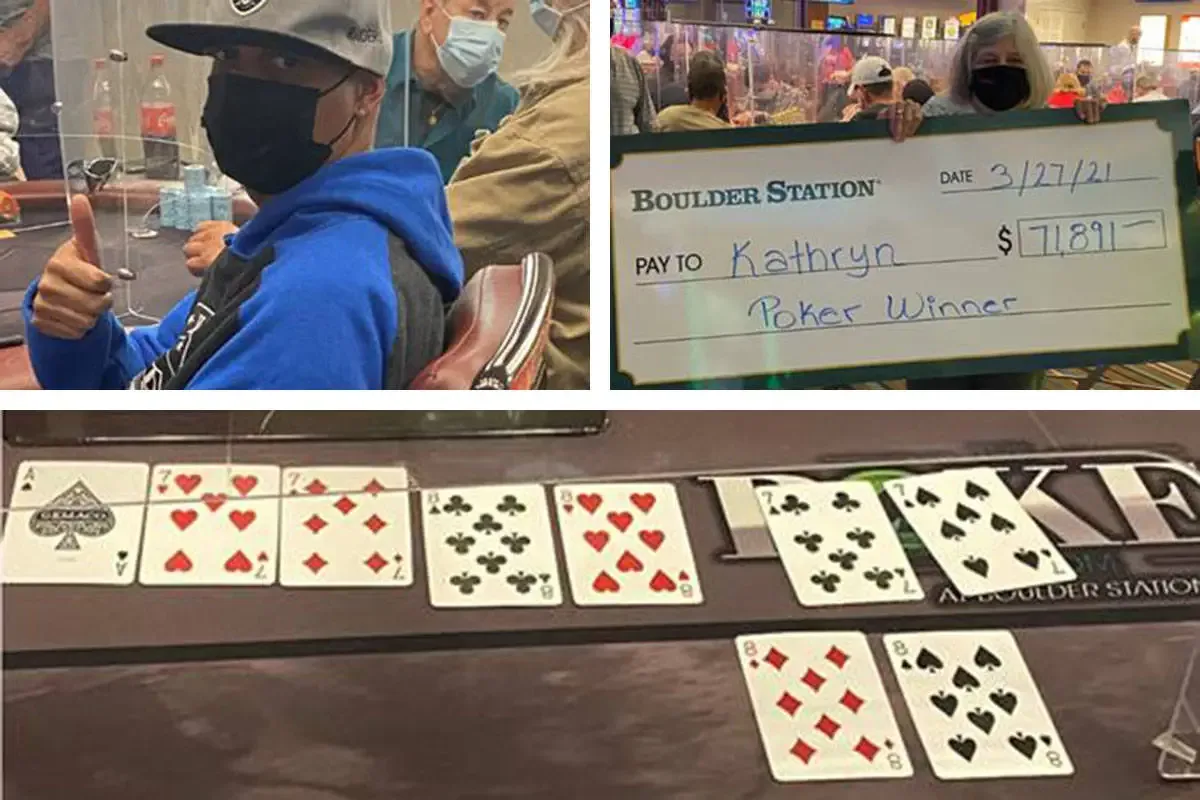
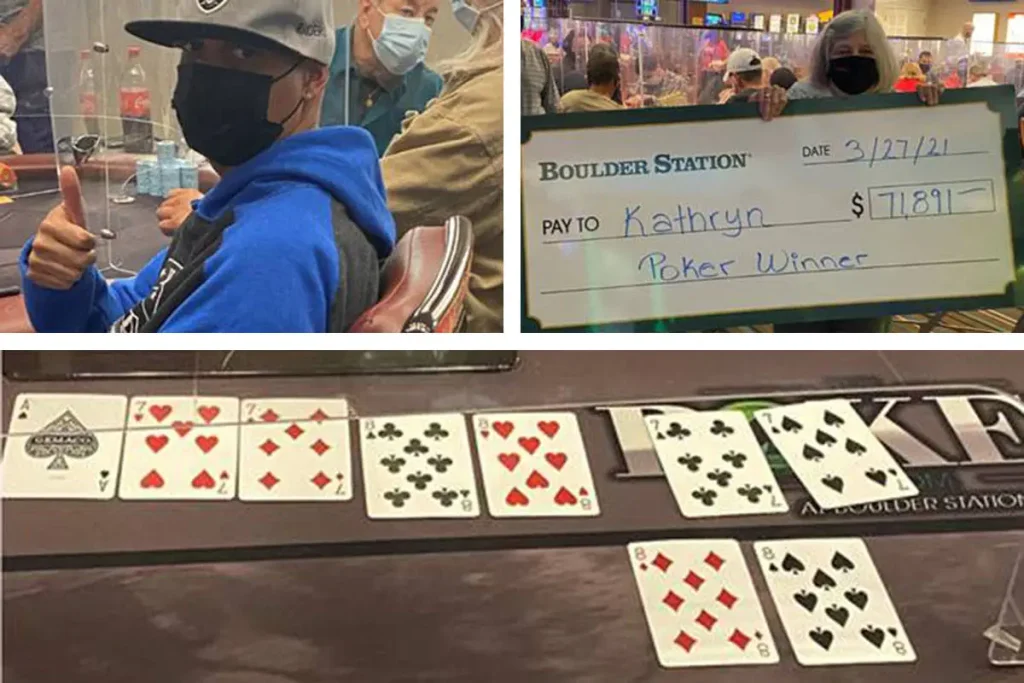
The freqnency of hitting Bad Beat Jackpot warries depending on the poker site or room, but on average players will have to lose with at least a strong full house (AAATT or better) while both of their cards in hand have to be used (you cant have A2 and hit it on AAKK board or A2 on AAA22 as you will need to hold pocket pair to qualify with quads), and also your opponent’s both cards have to be used to qualify for bad beat jackpot. So this is an extremely rare spot, and only high-volume players are almost guaranteed to hit it.
Odds of this kind of spot happening are 1 in 435,000–450,000 hands for 6-max no-limit hold ’em for quads to be beaten by better quads, while the odds improve in 10-player full ring to 1 in 250,000–260,000 hands. And if you are playing PLO, the odds improve up to 100,000–200,000 hands on average.
Bad Beat Jackpot is a variance-heavy event, and it may happen that you don’t hit the bad beat jackpot for a few million hands, or hit it five times in 100,000 hands. Heavy volume grinders who play (5000 hands/day) have a good chance to hit the Bad Beat Jackpot every three months.
There are also different rules for which pots get charged with the BBJ fee, so, for example, if it’s for >30 bb pots, maybe an interesting exploit could be to keep pots below that trigger point, as you will still be eligible for the BBJ, but won’t have to contribute to the prize pool.
You should only consider this if checking and betting in the pot is equal in EV or insignificantly low to one option. This will be hard to determine, but it’s possible for elite players.
Another interesting option could be to jump into already bloated BBJ prize pools and play elsewhere when pools are smaller. The BBJ prize pool can be tracked live on the site’s clients.
Conclusion
In general, BBJ is a 0 EV event, as every BB contribution returns as payouts without the house taking any portion of it. As previously mentioned, BBJ will be a +EV event for high-volume grinders, as they will take from the pool in which low-volume players won’t put enough volume to ever hit and return their invested share.
It will also be +EV for players who play full ring tables with 9+ players, as the jackpot will be split among more people than in 6-max, thereby taking a larger share of the prize pool than 6-max players.
It will also be an -EV event for tight players who will fold more and therefore have a lower chance of reaching later streets and hitting big hands.
The conclusion is that you shouldn’t play to chase BBJ, but play to win the money on the tables, and BBJ is just an extra event that is hard to predict.