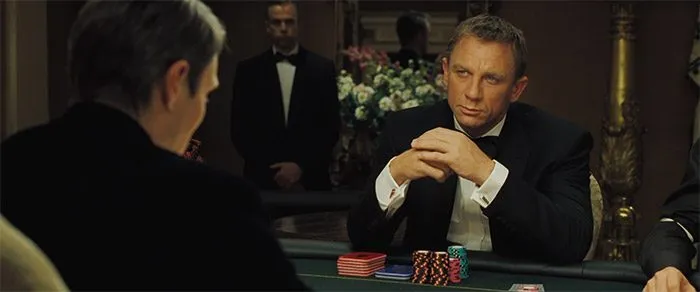
The first time a new poker player sits at a serious table, it is easy to assume that the game is mainly about cards. The player may understand the basic rules, recognize strong hands, and know a few standard probabilities. From the outside, success appears to depend on receiving good cards, betting confidently, and avoiding obvious mistakes. After spending enough time at the table, however, that view begins to change.
Experienced players are not only watching the cards. They are studying behavior, timing, betting patterns, posture, hesitation, confidence, and emotional reactions. They remember how opponents acted in previous hands and compare those patterns with what is happening now. A player who suddenly becomes aggressive may have a strong hand, but that aggression may also be hiding uncertainty. A quiet player may be cautious, or may simply be waiting for the right moment to take control.
The cards are only one layer of the game. The deeper contest involves judgment, observation, emotional discipline, risk management, and the ability to make decisions without complete information. This is why poker can offer valuable lessons far beyond the table. Many of the skills developed through strategic poker are directly relevant to entrepreneurship, management, investing, negotiation, sales, and other business fields.
Poker teaches people how to think in probabilities rather than guarantees. It forces the brain to process several types of information at the same time. It rewards patience, adaptability, and self-control while punishing emotional reactions and careless risk-taking. Most importantly, poker demonstrates that the quality of a decision cannot always be measured by the immediate result.
A strong poker decision can still lead to a lost hand, just as a well-planned business strategy can fail because of unexpected circumstances. A weak decision can sometimes produce a temporary success, just as a poor business idea may survive because of good timing or luck. Understanding the difference between decision quality and short-term results is one of the most useful lessons that poker can teach.
Poker Improves Decision-Making Under Uncertainty
Business decisions are rarely made with perfect information. An entrepreneur cannot know exactly how customers will respond to a new product. A manager cannot predict with certainty whether a new employee will perform well. An investor cannot see every market movement in advance, and a salesperson cannot always determine whether a potential client is genuinely interested or simply being polite.
Poker creates the same conditions in a controlled environment. A player can see personal cards and the community cards, but the opponents’ cards remain hidden. Every decision must therefore be based on incomplete information. Players use probabilities, previous actions, betting behavior, table position, and possible hand combinations to estimate what is most likely happening.
This process is closely related to strategic business thinking. Weak decision-makers often wait for certainty before taking action. They want every risk removed and every question answered before they commit. In reality, waiting too long can be as dangerous as acting too quickly. Markets change, competitors move, and opportunities disappear.
If you are looking for a site to play poker and want a good rakeback deal, you should check out Champion Poker, as it offers flat rakeback of up to 30%.
Poker teaches that a decision does not need to be certain in order to be rational. It needs to be supported by the best available evidence. A player may estimate that an opponent is bluffing often enough to justify calling a bet. That judgment will not be correct every time, but it may still be profitable across many similar situations.
The same reasoning applies when a business enters a new market, hires a senior employee, changes its pricing, or launches a new service. The decision-maker must consider the probability of success, the possible return, the potential loss, and the cost of waiting. Instead of asking whether the decision is guaranteed to work, a stronger question is whether the expected reward justifies the risk.
Poker also teaches the importance of updating a strategy when new information appears. A player may begin a hand with one assumption about an opponent, but a sudden change in betting behavior may challenge that assumption. The player must reconsider the situation instead of remaining attached to the original opinion.
This ability is essential in business. Companies often continue following outdated strategies because leaders have invested time, money, or pride in them. They may ignore changing customer behavior, new competitors, poor performance data, or technological developments. Poker trains players to recognize that changing direction is not weakness. It is often a sign of intelligent adaptation.
The strongest players and business leaders are not always correct from the beginning. Their advantage comes from noticing new evidence, adjusting their thinking, and responding faster than others.
Emotional Control Creates a Business Advantage
One of the most expensive mistakes in poker often begins with a single frustrating loss. A player makes a sensible decision, but an opponent wins after receiving an unlikely card. The player feels cheated by the result and begins trying to recover the lost money immediately. Bets become larger, weaker hands are played, and careful thinking is replaced by anger.
Poker players commonly describe this emotional state as tilt. Tilt occurs when frustration, fear, ego, excitement, or disappointment begins controlling decisions. A player on tilt may feel that the next hand must recover the previous loss. Instead of analyzing the current situation, the player is reacting to something that has already happened.
Business professionals experience similar emotional patterns. An investor may sell during a temporary market decline because fear becomes stronger than strategy. A business owner may reduce prices too quickly after losing one important customer. A manager may reject valuable criticism because it feels personal. An entrepreneur may spend more money on a failing project because admitting failure feels worse than continuing.
These actions are often presented as rational decisions, but they may actually be emotional reactions. Poker helps people recognize the difference. Because the game repeatedly creates uncertainty and pressure, players have many opportunities to observe how their emotions affect their thinking.
A disciplined poker player learns to notice early signs of poor emotional control. The player may become impatient, overly aggressive, unusually defensive, or focused on recovering losses. Once these signs are recognized, the player can step away, reduce risk, slow down, or return to a structured decision-making process.
This form of emotional awareness is highly valuable in leadership and negotiation. Business discussions often involve pressure, silence, disagreement, and uncertainty. An inexperienced negotiator may speak too quickly because silence feels uncomfortable. A manager may make an unnecessary concession because a difficult conversation creates tension. A business owner may agree to unfavorable terms because excitement about closing the deal replaces careful analysis.
Poker teaches people to remain calm when the outcome matters. It develops patience and demonstrates that not every challenge requires an immediate response. The person who controls personal emotions is often better able to influence the pace and direction of an interaction.
This does not mean that successful poker players or business leaders eliminate emotion completely. Emotion is a natural part of decision-making. The goal is to recognize it, understand it, and prevent it from becoming the only force guiding the next move.
Over time, poker can strengthen both analytical intelligence and emotional intelligence. It teaches players to study their own reactions while also studying the behavior of others. In business, this combination can create a meaningful competitive advantage.
Poker Develops Observation and People-Reading Skills
Poker is often described as a game of reading people, but successful players are not simply guessing what others are thinking. They observe patterns and compare current behavior with previous actions. The goal is not to rely on one facial expression or one nervous movement. The goal is to build a reasonable interpretation from several pieces of evidence.
A player may notice how quickly an opponent bets, whether the bet size is consistent with previous behavior, and whether the opponent becomes unusually quiet or talkative. The player may also consider whether the opponent’s actions tell a logical story. A large bet may suggest strength, but if the earlier actions do not support that strength, the bet may be a bluff.
This kind of thinking transfers naturally into sales, hiring, management, negotiation, and partnership development. In business, people do not always communicate their real concerns directly. A customer may say that a product is too expensive when the deeper issue is a lack of trust. A potential client may ask for more features when the real concern is implementation. An employee may appear resistant to change when the underlying problem is uncertainty about responsibilities.
A weak observer responds only to the words being spoken. A stronger observer considers the context, behavior, incentives, and patterns behind those words. Poker helps develop this deeper form of attention because players must constantly compare what someone says or represents with what their actions suggest.
The same skill is useful during hiring. A candidate may appear confident, but confidence alone does not prove competence. A careful interviewer looks for consistency between claims and examples. The interviewer considers how the candidate explains previous decisions, responds to difficult questions, and describes failure.
Poker also encourages caution when interpreting behavior. One gesture is not proof. One hesitation does not automatically indicate weakness, and one confident statement does not guarantee strength. Good players form hypotheses without becoming emotionally attached to them.
This balance is important in business because people frequently make assumptions based on limited evidence. Confidence may be confused with expertise, silence with agreement, friendliness with commitment, and disagreement with hostility. Poker teaches decision-makers to remain observant without becoming overconfident.
Every action at a poker table communicates something, even when the meaning is uncertain. Business interactions work in much the same way. Customers, competitors, partners, employees, and investors all reveal information through their choices, timing, priorities, and behavior.
The goal is not to become suspicious of everyone. The goal is to recognize patterns, test assumptions, and remain flexible enough to change an interpretation when new evidence appears. This creates better judgment across many professional fields.
Poker Teaches Risk Management and Long-Term Thinking
New poker players often focus on winning individual hands or building the largest possible pot. Experienced players are more concerned with making profitable decisions over time and protecting enough resources to continue playing. This difference reflects one of the most important connections between poker and business: long-term survival matters more than one dramatic victory.
A player can make a mathematically reasonable decision and still lose because of chance. If too much of the total bankroll is risked in one situation, a single negative result can remove the player from the game. The decision may have had a positive expected value, but the level of exposure may still have been irresponsible.
Businesses face the same problem. A company may discover an opportunity with strong potential returns, such as a new product, acquisition, marketing campaign, or international expansion. The opportunity may be attractive, but it can still be too dangerous if failure would threaten the survival of the organization.
Poker teaches players to distinguish between a good opportunity and an appropriate amount of risk. This lesson is especially relevant for entrepreneurs, who may be tempted to invest every available resource in one idea. A business may hire too quickly, expand before demand is proven, rely on one major client, or commit too much capital to an untested strategy.
Sometimes these decisions succeed, and the result appears visionary. When they fail, the company may not have enough resources to recover. Poker demonstrates that survival requires discipline, not only confidence.
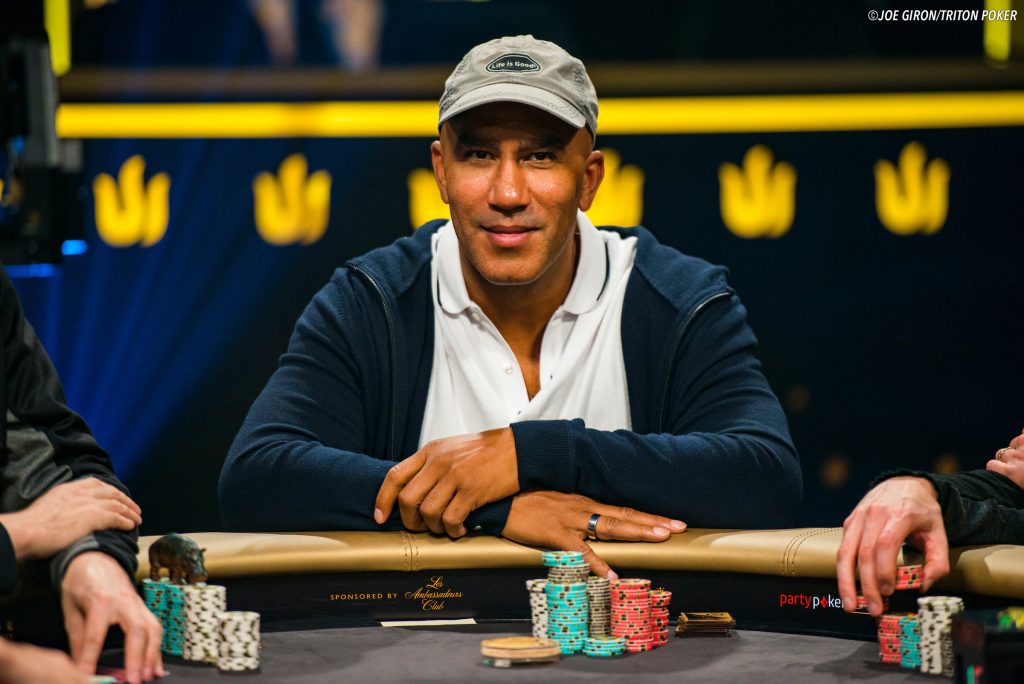
Bankroll management in poker is similar to cash-flow management in business. Both require enough reserves to survive normal losses, unexpected events, and periods of poor performance. In a business context, this may involve maintaining emergency capital, diversifying revenue, testing ideas on a smaller scale, and avoiding unnecessary fixed costs.
Poker also teaches that risk must always be evaluated in relation to reward. A small risk may be reasonable when the potential upside is significant. A large risk may be foolish when the possible gain is limited. This thinking improves decisions about resource allocation.
A company may need to decide whether to spend months building a complete product or create a smaller prototype first. It may need to choose between signing a long-term lease and using a flexible workspace. It may need to determine whether to invest heavily in one advertising channel or test several before increasing the budget.
Poker encourages calculated experimentation. Strong players do not try to win every hand. They fold frequently because they understand that preserving resources is often more valuable than defending a weak position. They wait for situations where the probabilities, position, and potential reward are more favorable.
Business leaders sometimes resist abandoning projects because stopping feels like failure. However, continuing to fund a weak idea can create greater damage. Poker teaches that folding is not necessarily a defeat. It can be a strategic decision that protects resources for a better opportunity.
Knowing when to continue, when to reduce exposure, and when to walk away is one of the most transferable lessons poker offers.
Poker Sharpens the Brain and Builds Strategic Thinking
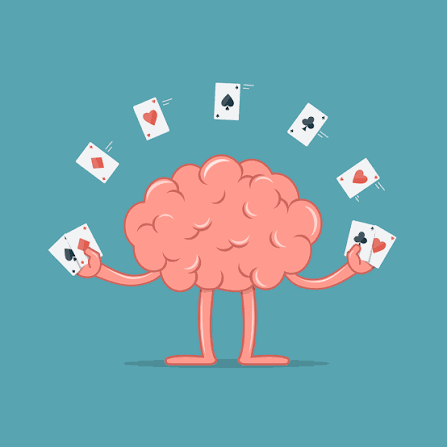
A poker table demands constant mental activity. Players calculate probabilities, remember previous actions, observe behavioral patterns, manage emotions, estimate risk, and plan future moves. These tasks happen at the same time, which makes poker a powerful exercise in concentration and flexible thinking.
The game develops working memory because players must remember how opponents acted in earlier hands. It strengthens attention because missing one bet size, hesitation, or behavioral change can affect the entire decision. It also improves pattern recognition because players repeatedly compare current situations with previous experiences.
Poker encourages several levels of strategic thinking. A beginner may focus only on the strength of a personal hand. A more advanced player considers what an opponent may be holding. A stronger player also considers what the opponent believes the player is holding.
This layered reasoning is useful in many business fields. In marketing, a company must think not only about the message it wants to communicate, but also about how customers will interpret it. In negotiation, each side must consider the goals, fears, and likely reactions of the other. In competitive strategy, a company must anticipate how rivals may respond to a product launch, pricing change, or market expansion.
Poker teaches players to think beyond the immediate move. Every action can influence what happens later. A small bet may be designed to gather information, create confusion, or prepare for a larger action in the future. Business strategy also requires this understanding of sequences and consequences.
Another important mental skill developed through poker is the ability to review decisions honestly. Serious players study previous hands, examine mistakes, and consider alternative actions. They do not judge a decision only by whether the hand was won or lost.
This is essential in business because positive outcomes do not always prove that the original strategy was strong. A poorly planned product may succeed because of perfect timing. A reckless investment may generate a profit. A weak hiring process may occasionally produce an excellent employee.
The opposite is also true. A carefully researched strategy can fail because of an unexpected market event, a competitor’s reaction, or simple bad timing. Poker teaches people to separate the result from the quality of the process.
The most useful question is not always whether the decision produced a win. The better question is whether the best possible choice was made with the information available at the time. Business leaders who adopt this mindset become more effective learners. They can study failure without becoming discouraged and study success without becoming overconfident.
The real value of poker extends far beyond cards and chips. The game creates a concentrated version of the challenges found in business and life. Players must operate with incomplete information, manage limited resources, understand other people, control emotional reactions, and make decisions without knowing the final outcome.
Entrepreneurs cannot control the economy, customer behavior, competition, or unexpected disruption. Managers cannot predict every problem, and investors cannot eliminate market volatility. What they can control is the quality of their thinking, the discipline of their process, and the amount of risk they are willing to accept.
Poker prepares people for business because it rewards patience over impulse, observation over assumption, and long-term strategy over emotional reaction. It sharpens the brain through probability, memory, analysis, and adaptation. It also develops transferable skills that apply to leadership, negotiation, investing, sales, management, and personal growth.
Poker is not automatically educational simply because someone plays it. The greatest value comes from approaching the game as a strategic discipline rather than a form of careless gambling. When played thoughtfully, poker becomes a practical classroom for decision-making.
The chips represent resources, the bets represent choices, and the opponents represent customers, competitors, partners, or negotiators. The unknown cards represent uncertain market conditions. A player cannot know exactly what will happen next, but can learn to observe carefully, think clearly, manage risk, and make the strongest possible decision with the information available.
If you want to know more about finding success in the WSOP Main Event, you can read about it here.