The global poker industry is starting to feel the effects of escalating geopolitical tensions in the Middle East, with concerns growing that the conflict could disrupt major tournaments and reshape the international poker calendar. While the poker world has historically proven resilient during times of global instability, the current situation has already begun to impact tournament planning, travel logistics, and player participation.
In recent weeks, reports of poker event cancellations and scheduling uncertainty have surfaced in destinations closely tied to international travel routes, including Cyprus. At the same time, organizers of major series in Las Vegas and other global poker hubs are watching the situation carefully, aware that the international nature of poker means that conflicts far from the casino floor can still affect the game.
As tensions rise and travel routes become more uncertain, players and tournament operators alike are beginning to ask whether the broader poker calendar could soon face wider disruption.
Cyprus Poker Events Under Pressure
Over the past decade, Cyprus has become one of the most important locations in the global poker ecosystem. The Mediterranean island hosts several major tournament festivals each year and has become a regular stop for players traveling between European and Middle Eastern poker circuits.
Events such as the European Poker Tour (EPT) Cyprus, the Mediterranean Poker Party, and multiple World Series of Poker Circuit (WSOPC) stops have drawn thousands of players to the island’s casino resorts. These tournaments often feature large prize pools and attract both elite professionals and recreational players from across Europe, Asia, and the Middle East.
According to Poker.org, Cyprus has quickly developed into a major international poker destination in recent years. The site noted that the island has become a key stop for high-stakes tournament poker, with festivals regularly drawing some of the biggest names in the game.
“Cyprus has become a major hub for international tournament poker, attracting players from across Europe and beyond,” Poker.org reported while covering recent tournament festivals on the island.
The Merit Royal Diamond Hotel Casino & Spa and other major venues have hosted some of the largest tournament series in the region. In one recent WSOP Circuit festival, the main event alone awarded a seven-figure first prize, illustrating the scale of the events now regularly held on the island.
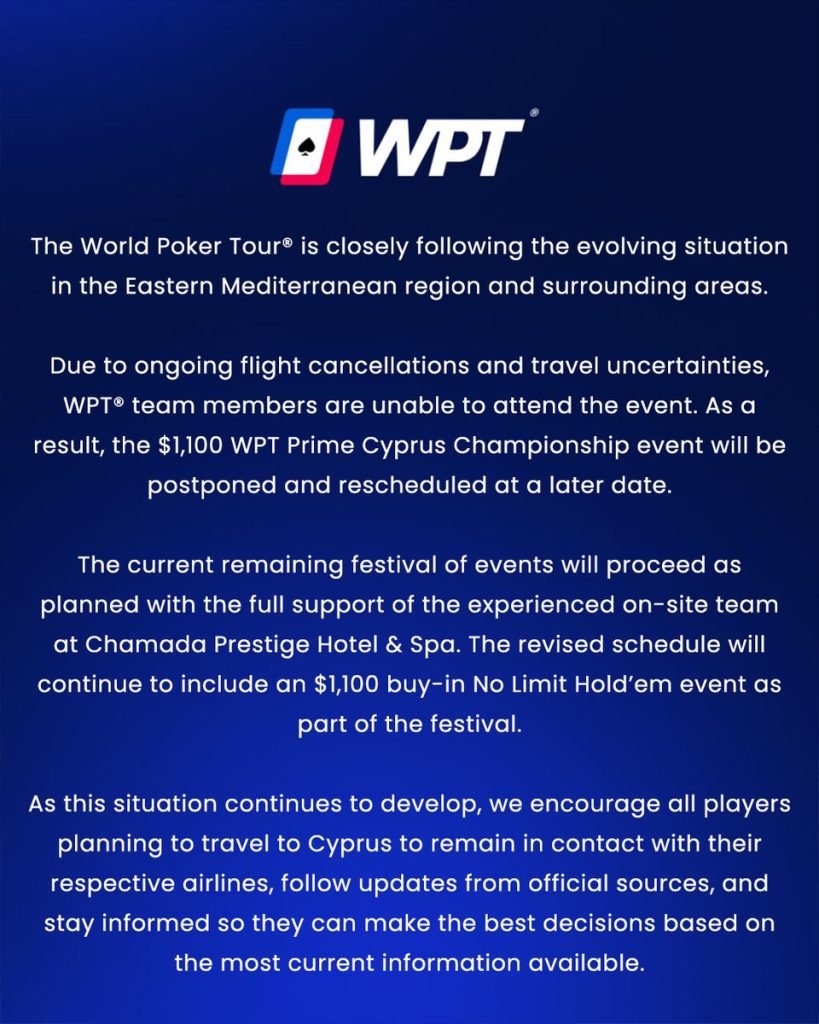
However, Cyprus’ geographic location places it relatively close to the Middle East, and that proximity is beginning to create logistical concerns for poker operators. Airspace restrictions, altered flight routes, and broader regional uncertainty have made travel more complicated for some international players.
While no widespread shutdown of Cyprus poker events has occurred, tournament organizers are reportedly monitoring the situation closely. If instability continues to spread, upcoming festivals could face postponements or cancellations — particularly those that rely heavily on players traveling from nearby regions.
For a poker destination that depends on international attendance, even a modest drop in participation can significantly affect prize pools and tournament guarantees.
Las Vegas Monitoring Global Impact
Although Las Vegas is geographically distant from the Middle East, the city remains deeply connected to the global poker economy. Major events such as the World Series of Poker (WSOP) rely on thousands of international players traveling to Nevada every year.
The WSOP, widely considered the most prestigious poker tournament series in the world, attracts competitors from more than 100 countries annually. This global participation is one of the reasons Las Vegas has remained the center of the live poker universe.
Because of this international player base, global travel disruptions can quickly affect tournament attendance.
PokerNews, one of the most widely read poker media outlets, frequently highlights the international nature of modern poker tournaments.
“Live poker tournaments now operate on a truly global circuit, with players traveling from stop to stop across continents,” PokerNews has noted while covering the international tournament schedule.
If flights become more complicated or travel advisories discourage players from flying long distances, major poker festivals in Las Vegas could see reduced participation.
Even relatively small changes in attendance can have a significant impact on tournaments. Lower player numbers can shrink prize pools, affect guaranteed payouts, and alter the economics of hosting large events.
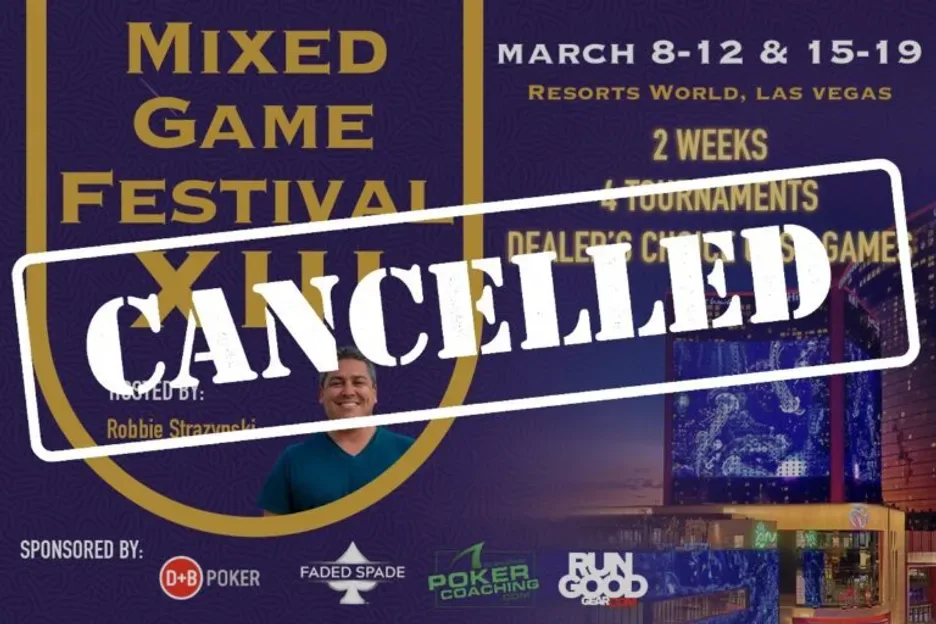
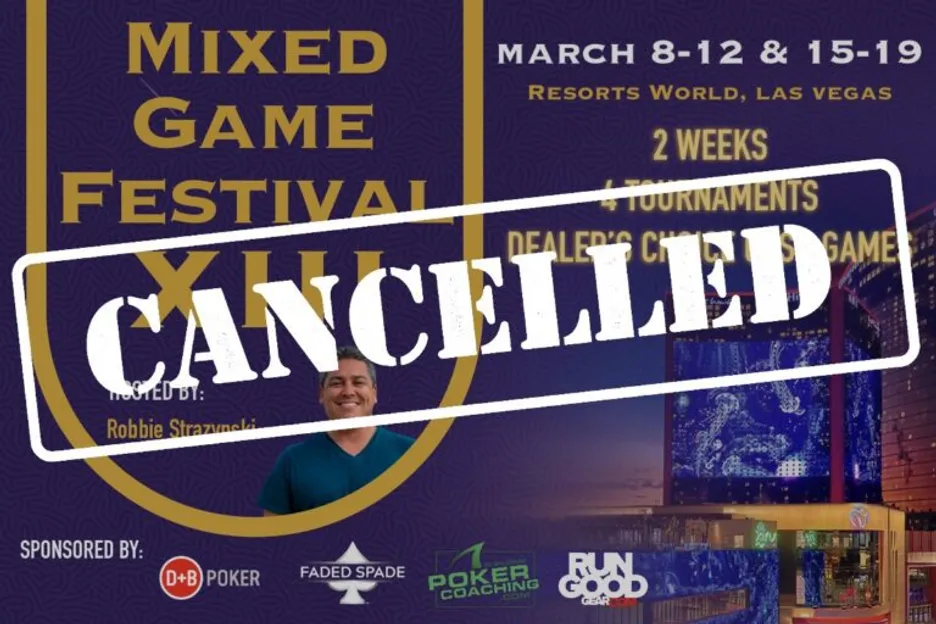
Las Vegas poker rooms have also experienced unexpected tournament disruptions in the past due to operational issues. Previous incidents — including venue closures and logistical problems — have forced casinos to cancel or reschedule events with little notice.
While those incidents were unrelated to geopolitics, they demonstrate how sensitive live tournament schedules can be.
For now, Las Vegas poker operators remain confident that upcoming events will proceed as planned. But industry insiders acknowledge that the situation is being monitored closely.

If you are looking for a site to play poker and want a good rakeback deal, you should check out Champion Poker, as it offers flat rakeback of up to 30%.
A Global Poker Circuit Built on Travel
Unlike most traditional sports leagues, professional poker does not operate from a single location. Instead, the game functions through a global circuit of tournaments that take place year-round across different continents.
Professional players often travel continuously throughout the year, moving from one major festival to the next. A typical schedule might include events in Europe, the Mediterranean, Asia, and North America within a matter of months.
PokerNews’ live reporting pages illustrate just how busy the international poker calendar has become, with multiple major tournaments often running simultaneously in different parts of the world.
This interconnected structure means that disruptions in one region can ripple through the entire system.
For example, many players who attend tournaments in Cyprus also travel on to stops in Europe or Las Vegas later in the year. If a single festival is cancelled, it can disrupt travel plans and reduce participation at subsequent events.
Poker professionals often plan their annual schedules months in advance. Flights, accommodations, and bankroll management strategies are frequently tied to specific tournament series.
When those events suddenly disappear from the calendar, players are forced to adjust quickly.
Memories of Previous Global Disruptions
The poker world has experienced large-scale tournament cancellations before.
During the COVID-19 pandemic, nearly every major live poker event around the world was suspended. Casino poker rooms closed, international travel halted, and the global tournament circuit effectively shut down for months.
Many events were either cancelled outright or moved online, fundamentally altering the poker landscape during that period.
While the current geopolitical situation is far different from a global pandemic, it serves as a reminder of how vulnerable live poker can be to external events.
Casinos, tournament operators, and players all depend on international travel and stable logistics. When those systems are disrupted, the poker ecosystem can quickly feel the effects.
Potential Risks for Upcoming Poker Events
If the conflict in the Middle East continues to escalate, several areas of the poker calendar could face increased risk.
Events in destinations geographically close to the region — particularly in the Mediterranean — may encounter travel complications first. Flights may be rerouted, travel advisories could expand, and some players may choose to skip events altogether.
At the same time, larger global series could face secondary effects if international attendance drops.
Major upcoming festivals that rely heavily on international participation include:
- European Poker Tour stops
- World Poker Tour global events
- Mediterranean casino festival series
- Major tournament weeks in Las Vegas
Even if these events are not cancelled outright, lower player turnout could lead to smaller prize pools and adjustments to tournament guarantees.
For organizers who invest significant resources into hosting large poker festivals, uncertainty surrounding travel and attendance can create difficult decisions.
Poker Community Watching Closely
For now, the global poker calendar remains largely intact. Major tours continue to schedule events, and casinos around the world are preparing for upcoming tournament festivals.
But the situation in the Middle East has introduced a new level of uncertainty that did not previously exist.
Players who regularly travel across continents for tournaments are paying close attention to the situation, particularly when planning long-distance trips.
Tournament organizers are also monitoring developments carefully, aware that geopolitical instability can influence player participation and event logistics.
The poker world has always adapted to changing circumstances, from economic downturns to global health crises. Whether the current conflict will have a lasting impact on the game remains unclear.
However, if tensions continue to rise and travel disruptions expand, the ripple effects could extend far beyond the Middle East — potentially affecting poker tournaments from Cyprus to Las Vegas and reshaping the global poker calendar in the months ahead.
If you want to improve your poker skills, you can read the article on “Mastering 3-Betting in and Out of Position, And How to Defend Against It” by clicking here.