Cash game poker is often described as a technical discipline built around probability, expected value, range construction, bet sizing, and strategic exploitation. At a sufficiently high level, however, technical competence is only one component of long-term performance. The ability to calculate pot odds or identify theoretically appropriate bluffing frequencies does not automatically translate into consistent success at the table. Poker is played by human beings, and human behavior introduces psychological, social, and emotional variables that cannot be fully represented by mathematical models alone.
This is where the soft skills of cash game poker become important.
Soft skills are behavioral abilities that affect how a player processes information, communicates, manages pressure, interprets other people, and regulates personal reactions. In professional environments, these abilities are commonly associated with leadership, negotiation, emotional intelligence, decision-making, and interpersonal awareness. In poker, many of the same mechanisms appear in a different form.
A cash game player must make decisions under uncertainty while experiencing financial pressure, incomplete information, fluctuating emotions, social interaction, fatigue, and repeated exposure to short-term variance. These conditions make poker an unusually demanding environment for human cognition.
The strongest players therefore do more than understand strategy. They develop emotional stability, patience, observational awareness, communication control, adaptability, and disciplined decision-making. These poker soft skills can influence how accurately a player interprets information, how consistently they execute a strategy, and how effectively they function during long sessions.
Understanding the psychology of cash game poker is therefore not an alternative to studying technical strategy. It is a complementary discipline that helps technical knowledge survive contact with the realities of the poker table.
Emotional Regulation and the Neuropsychology of Poker Decisions
Emotional regulation is one of the most important soft skills in cash game poker because poker repeatedly exposes players to events that can distort rational decision-making.
A player can make a mathematically correct decision and lose a large pot. Another player can make a serious strategic mistake and still win. This disconnect between decision quality and immediate outcome is psychologically difficult because the human brain naturally searches for clear relationships between actions and rewards.
Poker frequently provides the opposite.
In behavioral psychology, decision-making is strongly influenced by reinforcement. Actions followed by positive outcomes tend to become more attractive, while actions followed by negative outcomes can become psychologically aversive. In poker, however, short-term reinforcement is unreliable. A bad call may win. A disciplined fold may appear unnecessary after an opponent shows a bluff. A correctly played all-in situation can result in a significant financial loss.
The ability to separate process from outcome is therefore a central element of emotional control in poker.
Tilt represents one of the most obvious failures of this separation. Although the term is used casually, tilt can be understood as a state in which emotional activation interferes with normal decision processes. Anger, frustration, embarrassment, fear, or excitement can narrow attention and increase impulsivity. A player who normally evaluates ranges carefully may begin making rapid calls, forcing bluffs, or entering marginal situations because the emotional objective has changed.
Instead of maximizing expected value, the player may subconsciously begin trying to recover losses, punish an opponent, avoid looking weak, or recreate the emotional satisfaction of winning a large pot.
This is why emotional intelligence in poker should be considered a performance skill rather than a personality trait.
Strong emotional regulation does not require the absence of frustration. It requires awareness of emotional states before those states substantially alter behavior. Experienced cash game players often become skilled at recognizing changes in their own attention, breathing, posture, pacing, and internal dialogue. These signals can function as early indicators that decision quality is beginning to deteriorate.
The practical objective is not emotional suppression. It is emotional monitoring.
A player who understands their own psychological state is more capable of determining whether a decision is based on strategic information or emotional momentum. Over thousands of hands, this distinction can have meaningful consequences.
Patience, Impulse Control, and the Value of Selective Action
Poker rewards action dramatically but patience quietly.
Large pots, difficult bluffs, and aggressive plays receive attention because they create visible outcomes. Folding does not. Waiting does not. Declining to participate in a marginal situation rarely produces an exciting story. Yet cash game poker involves enormous amounts of deliberate inactivity.
This creates an important psychological contradiction. Humans generally prefer visible progress and immediate feedback, while strong poker strategy frequently requires waiting for profitable conditions.
Patience in poker is therefore closely connected to impulse control.
A player may understand theoretically that a hand should be folded but still feel compelled to participate because they have been card-dead for an hour. Another player may widen their range after watching several opponents win large pots. Someone who has been losing may suddenly perceive neutral situations as opportunities to recover.
These decisions are not always caused by a lack of poker knowledge. They are often caused by difficulty tolerating inactivity, uncertainty, or temporary frustration.
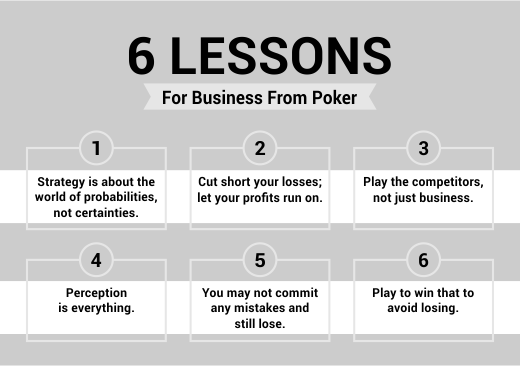
From a cognitive perspective, boredom can become strategically dangerous. When stimulation decreases, attention can weaken and novelty-seeking behavior can increase. At the poker table, this can translate into unnecessary calls, speculative raises, oversized bluffs, or excessive participation in marginal hands.
The ability to remain strategically selective is therefore one of the most underappreciated poker soft skills.
Strong cash game players do not necessarily experience less boredom. They are simply less likely to allow boredom to determine their actions.
Patience also affects table selection, session length, and quitting decisions. A player who feels psychologically obligated to continue until reaching a specific financial result may ignore declining concentration or increasingly unfavorable table conditions. Conversely, a disciplined player evaluates whether the environment still provides a reasonable basis for good decision-making.
This distinction is particularly important because cash games do not have the natural ending structure of tournaments. A cash session can theoretically continue indefinitely. Players must therefore create their own stopping criteria.
The ability to stop playing is, in many cases, another expression of impulse control.
Observation, Social Intelligence, and Reading the Poker Environment
The phrase “reading people” is sometimes presented as if poker players possess a mysterious ability to detect deception. In practice, useful observation is usually less dramatic and more systematic.
Strong observational awareness involves detecting patterns.
Cash game poker provides a continuous stream of behavioral information. Players reveal timing patterns, betting preferences, conversational habits, emotional responses, and strategic tendencies. Individually, these observations may have limited value. Over time, however, repeated behaviors can help construct more accurate models of opponents.
This is closely related to social intelligence.
Social intelligence refers broadly to the ability to understand interpersonal behavior and adapt appropriately to social environments. At a poker table, this includes recognizing personality differences, communication styles, comfort levels, and emotional shifts.
A highly talkative player who suddenly becomes silent during a major pot may attract attention. A normally relaxed player may become visibly rigid. Another opponent may repeatedly discuss previous hands after losing. None of these behaviors should automatically be treated as reliable evidence about a specific hand, but they may contribute to a broader behavioral profile.
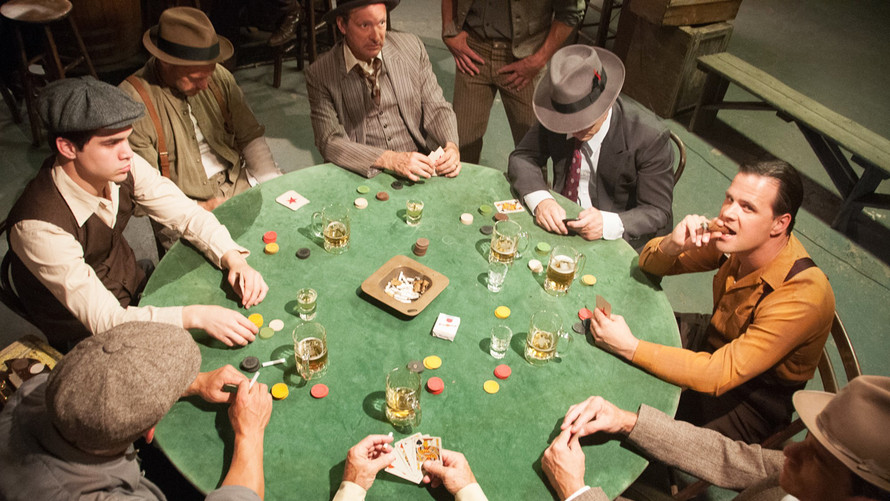
The scientific approach is important here because human beings are vulnerable to confirmation bias.
If a player believes that nervous behavior indicates weakness, they may remember the occasions when this assumption was correct and ignore the occasions when it failed. Reliable observation therefore requires repeated evidence rather than isolated impressions.
Good poker observation is probabilistic, not absolute.
Social awareness also extends beyond individual tells. The overall atmosphere of a cash game can influence behavior. Some tables are highly social and recreational. Others are quiet and analytical. Certain players become more aggressive when they are winning. Others tighten dramatically after losing. Some players respond emotionally to specific opponents.
Recognizing these dynamics can improve strategic context.
This is particularly relevant in live cash game poker, where players may spend many hours together. The table becomes a temporary social system with its own hierarchy, conversations, tensions, and behavioral norms.
Understanding that environment does not replace technical analysis, but it can improve the quality of the information entering that analysis.
Communication Skills and Table Presence in Live Cash Games
Communication is rarely treated as a formal component of poker strategy, yet it influences the live cash game environment constantly.
Every verbal interaction communicates information. Tone, timing, confidence, hesitation, humor, frustration, and even the decision not to speak can shape how other players perceive someone at the table.
Effective table communication begins with consistency.
Players who dramatically alter their behavior depending on the strength of their hand may unintentionally create information. Someone who becomes unusually conversational while bluffing or unusually quiet with strong hands may develop recognizable patterns. For this reason, behavioral consistency can function as a form of information control.
Table presence also affects the social quality of the game.
Cash games differ from many competitive environments because participants often have considerable freedom over where and whether they play. A pleasant table atmosphere can encourage longer sessions and more comfortable interaction, while hostility can produce unnecessary conflict.
Professional behavior therefore has strategic as well as social value.
This does not mean attempting to manipulate or pressure other players. Rather, it means understanding that emotional escalation rarely improves decision quality. Arguments over etiquette, slow rolls, ambiguous comments, dealer decisions, or previous hands can consume cognitive resources that would otherwise be available for observation and analysis.
Communication discipline can protect attention.
There is also a deeper psychological dimension to table presence. Some players feel pressure to demonstrate intelligence or confidence. They may explain strategy unnecessarily, defend previous decisions, or respond emotionally when another player criticizes their play.
From a performance perspective, this is usually irrelevant.
A poker decision does not become more or less profitable because the table approves of it. The ability to tolerate misunderstanding is therefore another form of emotional maturity.
Strong cash game players can maintain a stable social presence without constantly attempting to control how others perceive them.
Adaptability, Cognitive Flexibility, and Exploitative Thinking
Cash game poker is dynamic. Strategies that perform well against one player population may perform poorly against another. A table can change substantially when a single participant leaves or joins.
This makes adaptability one of the most valuable soft skills in poker.
Cognitive flexibility is the ability to revise thinking when new information appears. In poker, this means avoiding rigid attachment to assumptions.
A player may begin a session believing that an opponent is extremely aggressive. After sufficient evidence, it may become clear that the opponent is aggressive preflop but unusually passive on later streets. Another player may initially appear inexperienced but demonstrate sophisticated bet sizing and range awareness.
Strong players update.
If you are looking for a site to play poker and want a good rakeback deal, you should check out Champion Poker, as it offers flat rakeback of up to 30%.
Weak adaptation often occurs because human beings develop psychological attachment to their first interpretations. This phenomenon is related to anchoring, a cognitive bias in which early information disproportionately influences later judgment.
Poker creates constant opportunities for anchoring. A player may see an opponent make one unusual bluff and permanently classify them as reckless. Another opponent may show down a strong hand several times and become incorrectly categorized as extremely tight.
The better approach is Bayesian in spirit, even when no formal calculation is performed. New information should modify existing beliefs rather than simply confirm them.
Adaptability also applies to strategy itself.
Modern poker education has increased awareness of game theory optimal concepts, balanced ranges, minimum defense frequencies, and solver-based analysis. These frameworks are valuable because they provide structured strategic foundations. However, cash games are played against actual opponents rather than theoretical abstractions.
If you want to learn more about exploits in low stakes MTTs, you can read about it here.