The Night the Table Went Silent
The hand started like any other hand in an online poker tournament. Twelve players remained, the prize money had become serious, and every decision carried the weight of hours already spent staring at a glowing screen. On one monitor, the player watched the virtual felt. On another, a lobby showed shrinking table counts and rising blinds. The coffee beside him had gone cold, but he did not notice. He was deep in the kind of poker session where time disappears and every click feels permanent.
He looked down at ace-king suited.
For most players, this is the kind of hand that wakes the room up, even when the room is just a desk, a chair, and the hum of a laptop fan. The action folded to him on the button. He raised. The small blind folded. The big blind, a player with a strange pattern all night, moved all in.
That was when the silence arrived.
Not the silence of hesitation. Not the silence of fear. It was the colder silence that comes when instinct says something is wrong.
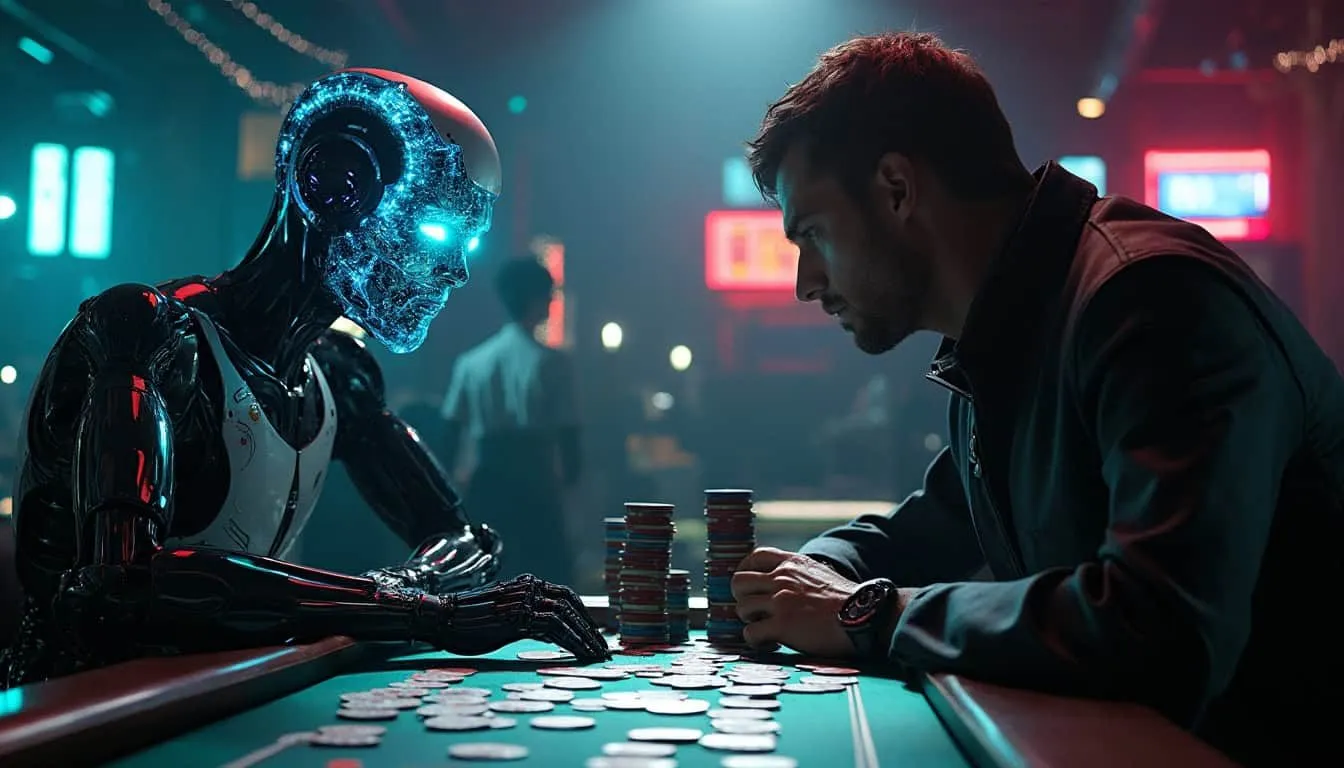
The big blind had played almost perfectly for three hours. Too perfectly. He folded in spots where humans usually get curious. He called in spots where only solver-level precision seemed to justify it. He never used the same timing twice, yet his decisions always landed in a range that felt mathematically polished. Earlier, another player in the chat had typed, “This guy is a bot,” but nobody had answered. In online poker, accusations are common. Proof is rare.
The player with ace-king hovered over the call button, but the question in his mind was no longer just about pot odds, stack depth, or tournament life. It was about trust.
Was he playing against a person or software? Was the game fair? Was the site’s cybersecurity strong enough to detect artificial intelligence tools, real-time assistance, collusion, account sharing, and data leaks? Was online poker still a battle of human judgment, or had it become a hidden war between players, algorithms, and security teams?
He folded.
The big blind showed nothing, of course. Online poker does not offer the little human clues that live poker gives away so generously. There was no trembling hand, no forced smile, no glance at the dealer, no heavy breathing, no chip shuffle that suddenly stopped. There was only an avatar, a screen name, and a digital stack of chips sliding across a digital table.
That night, the player did not lose because of one hand. He lost because something more important than chips had been damaged. He lost confidence in the game.
That is the real cybersecurity problem in poker. It is not only about hackers stealing passwords, criminals attacking payment systems, or cheaters using artificial intelligence to gain an unfair edge. It is about whether players believe the game is still worth playing. Poker has always depended on trust. Trust that the deck is fair. Trust that the dealer is honest. Trust that the opponent is making decisions alone. Trust that when money enters the pot, the contest is real.
Artificial intelligence is now testing that trust in a way poker has never seen before.
For online poker, AI may become both the greatest threat and the greatest defense. For live poker, it may do something unexpected. It may make the old green felt feel safer, more human, and more valuable than it has in years.
Online Poker Enters the Age of Invisible Opponents
Online poker was built on convenience. You could play Texas Hold’em from your kitchen, Omaha from your couch, or a multi-table tournament while wearing headphones at two in the morning. It removed the travel, the waiting lists, the casino noise, and the pressure of sitting face to face with strangers. For years, that convenience was its greatest advantage.
Now it is also its biggest vulnerability.
In live poker, cheating usually needs a physical act. A marked card. A hidden signal. A crooked dealer. A phone under the table. A player whispering information to a partner. These things can happen, but they exist in the physical world, where people can be watched, confronted, recorded, and removed.
Online poker is different. Its battlefield is invisible. The threats live inside devices, networks, databases, scripts, private chat groups, screen-sharing tools, and artificial intelligence systems that most players will never see. A poker site can look clean on the surface while a security team behind the scenes is fighting thousands of small wars every day.
Cybersecurity in online poker used to focus mainly on account protection and financial safety. Poker operators needed to protect deposits, withdrawals, identity documents, passwords, and payment data. That still matters. A player’s bankroll is not just a number on a screen. It is money, and where there is money, there are attackers. Phishing emails, fake poker clients, malware, stolen credentials, and payment fraud remain constant threats.
But AI has expanded the definition of poker cybersecurity.
The modern online poker security question is no longer only, “Can someone break into the system?” It is also, “Can someone secretly bring a machine to the table?”
Artificial intelligence can affect online poker in several ways. Some uses are legitimate. Players use AI-based study tools away from the table to review hands, understand ranges, improve bet sizing, and learn game theory optimal strategy. That kind of study is part of the evolution of poker. Every generation of players has used better tools than the last. Books replaced barroom myths. Training sites replaced guesswork. Solvers replaced vague advice. AI coaching may become the next step.
The danger begins when assistance moves from study to real-time decision-making.
A player using real-time assistance during a hand is not simply well prepared. He is no longer playing alone. If software can analyze the situation instantly and recommend whether to fold, call, raise, bluff, or value bet, the human becomes a button-clicker for the machine. In that environment, honest players are not competing against another mind. They are competing against a system with perfect memory, endless patience, no emotional tilt, and no fear.
The threat becomes even more serious when AI is combined with bots. A bot does not get tired. It does not misclick because it is frustrated. It does not chase losses after a bad beat. It can play thousands of hands with consistent strategy, harvest small edges, and disappear before casual players understand what happened. A single bot is a problem. A network of bots sharing data, avoiding obvious patterns, and adapting to detection systems is a cybersecurity crisis.
Then there is collusion. Poker has always had colluders, but online poker gives dishonest players more ways to coordinate. AI can make that coordination smarter. Imagine several accounts at the same table secretly sharing hole cards, stack information, and strategy recommendations through external software. Even without perfect play, the advantage can be enormous. The victims may never know. They may simply feel unlucky.
If you are looking for a site to play poker and want a good rakeback deal, you should check out Champion Poker, as it offers flat rakeback of up to 30%.
This is why online poker platforms must treat cybersecurity as part of game integrity, not just technical infrastructure. Encryption, secure logins, identity verification, device fingerprinting, behavioral analytics, bot detection, geolocation controls, payment monitoring, and anti-collusion systems all belong to the same mission: keeping poker human enough to be trusted.
The difficult part is that AI helps both sides.
Cheaters can use AI to hide patterns, imitate human timing, randomize decisions, and avoid detection. Security teams can use AI to detect abnormal behavior, compare decision profiles, identify suspicious win rates, flag impossible consistency, and connect accounts that seem unrelated. This creates an arms race. Every new defense inspires a new attack. Every new cheating method forces a new layer of monitoring.
For players, the result is psychological uncertainty. In a live poker room, when someone makes a strange river call, the table can look at him. Maybe he is a genius. Maybe he is reckless. Maybe he saw something in the opponent’s face. Online, the same call raises darker questions. Did he know? Did software tell him? Is this account real? Is the site watching?
Poker can survive bad beats. It can survive variance. It can survive tough opponents. What it cannot survive is a widespread belief that the game is not fair.
That is why the future of online poker will depend less on flashy promotions and more on visible trust. Players will want operators to explain, without revealing exploitable secrets, how they protect games from AI abuse. They will want fast action against suspicious accounts, transparent refund policies when cheating is proven, and clear rules about permitted and prohibited software. They will want poker rooms to invest in cybersecurity the way casinos invest in cameras, floor staff, dealers, and vaults.
The online poker sites that win the next decade will not simply be the ones with the biggest tournaments. They will be the ones players believe are safest.
AI Becomes the Dealer, the Coach, and the Watchman
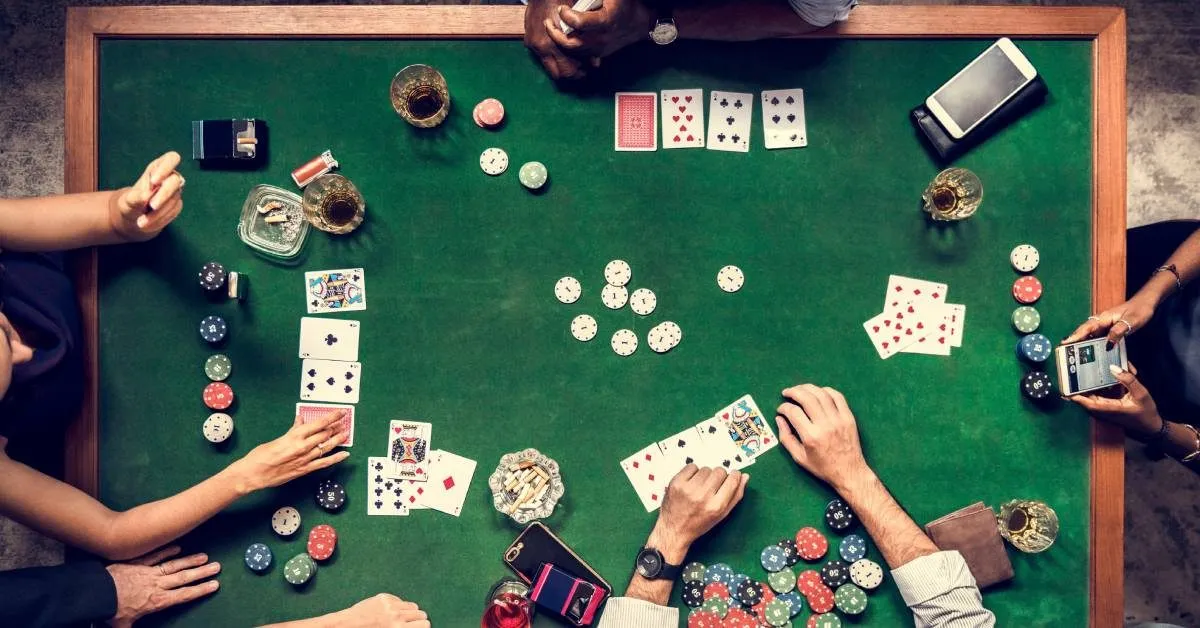
A few months after that strange online tournament, the same player found himself in a live poker room again. It was a Friday night, and the room was crowded in a way that online poker could never imitate. Chips clicked from every direction. A dealer called for a seat open at table six. Someone groaned after losing with kings. Someone else laughed too loudly after winning with seven-four suited, as if laughter could justify the call.
He sat in a $2/$5 no-limit hold’em game and immediately felt something he had not felt online.
Presence.
Across from him was a retired man in a baseball cap who stacked his chips in uneven towers. To his left was a young woman wearing headphones but clearly listening to every word. Two seats over was a businessman who ordered sparkling water and played far too many hands. Nobody at the table was perfect. That was the beauty of it. They had habits, moods, distractions, pride, impatience, fear, confidence, and stories.
Still, AI had followed him into the room.
Not directly, not in the form of a glowing screen giving advice during a hand. But it was there in the background, reshaping how people studied, how casinos operated, how security teams monitored games, and how players thought about the future of poker.
Artificial intelligence will not affect only online poker. It will affect live poker too, but in a different way.
For players, AI will become a powerful training partner. A serious poker player can already study hands with advanced software, compare decisions against solver outputs, and explore how ranges interact on different boards. As AI poker coaching improves, it may become more conversational, more personal, and more accessible. Instead of staring at complex charts, a player may ask why a turn bet is better than a check, why a river bluff fails against a certain range, or how live poker adjustments differ from online theory.
This could raise the general skill level of poker. Casual players may learn faster. Serious amateurs may close the gap against professionals. Professionals may use AI to refine strategies with greater precision. The average player at a live poker table in five years may understand concepts that only elite online grinders discussed a decade ago.
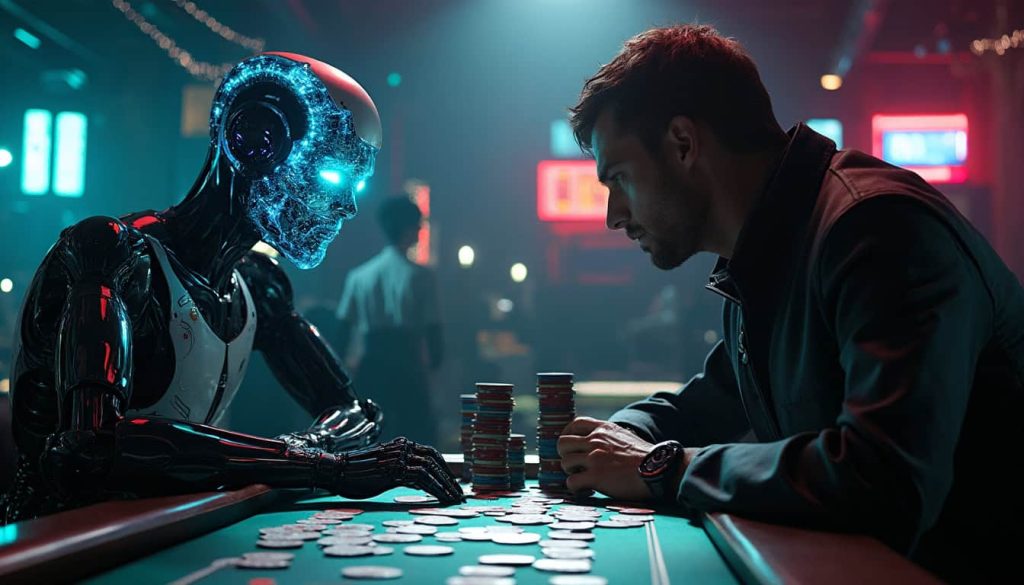
That sounds bad for live poker at first. If everyone gets better, where does the profit come from?
But poker has never been only about technical knowledge. Especially live poker.
Live poker includes patience, emotional control, bankroll discipline, table selection, speech play, physical tells, social dynamics, fatigue, ego, comfort, intimidation, and the ability to make good decisions in an imperfect environment. AI can teach ranges, but it cannot sit in your chair and calm your pulse when a man who has not bluffed all night suddenly check-raises the river. It can explain theory, but it cannot make a tired player fold when pride wants to call. It can describe live tells, but it cannot guarantee what a trembling hand means in a specific human being at a specific moment.
In fact, as AI makes online poker more technical, live poker may become more appealing precisely because it is less machine-like.
Live poker’s imperfections are not bugs. They are features.
The dealer can make eye contact. The floor can answer questions. Cameras can watch the table. Players can see who is actually present. Phones can be restricted. Suspicious behavior can be noticed by other humans. A player cannot easily run a real-time solver under the table without creating physical risk. Collusion still exists, but it requires visible coordination and social proximity. Identity is harder to fake when someone is physically seated under casino surveillance.
Casinos may also use AI as a security tool. Computer vision could help monitor table behavior, detect unusual chip movements, identify banned players, support surveillance teams, and flag patterns that human staff might miss. AI systems could assist with fraud prevention, responsible gambling monitoring, anti-money laundering controls, and operational efficiency. Used responsibly, these technologies could make live poker rooms safer and more professional.
But there is a line casinos must be careful not to cross.
Poker players do not want to feel like they are inside a laboratory. If live poker becomes too heavily monitored, too automated, too sterile, or too data-driven, it may lose the atmosphere that makes it special. The best future for live poker is not one where AI replaces the human experience. It is one where AI protects the game quietly while people remain at the center of it.
There is also a major cybersecurity issue for casinos themselves. Modern poker rooms are no longer purely physical businesses. They use player loyalty systems, digital waitlists, surveillance networks, payment systems, hotel integrations, tournament registration platforms, and sometimes mobile apps. Every connected system creates risk. A casino may have physical chips and live dealers, but its customer data, financial records, camera infrastructure, and internal networks still need strong cybersecurity.
So live poker is not immune to the digital world. It simply has a different defensive structure.
Where online poker must prove that the opponent is human, live poker begins with the advantage of physical presence. Where online poker must detect invisible software, live poker can restrict devices and monitor behavior in person. Where online poker struggles with anonymous screen names, live poker has faces, IDs, cameras, staff, and community memory.
That does not make live poker perfectly safe. It makes it more naturally resistant to the specific AI threats that could damage online poker most severely.
And that may be enough to bring players back.
Why Live Poker May Benefit From the AI Era
Near midnight, in that $2/$5 game, a hand developed that reminded the player why he had fallen in love with poker in the first place.
He held pocket tens in middle position. The businessman opened. The young woman called. He called. The big blind called. Four players saw a flop of ten-seven-two rainbow.
Top set.
The businessman continued betting as if the board belonged to him. The young woman called quickly. Our player called slowly, trying to look uncertain. The big blind folded. The turn was a queen, adding a possible straight draw. The businessman bet again, larger this time. The young woman looked at her chips for a long moment and folded. The action returned to him.
Online, this would have been a calculation. Stack-to-pot ratio. Ranges. Bet size. Turn texture. Raise frequency. Expected value.
Live, it was all of that, plus the way the businessman’s shoulders had changed after the queen landed. He seemed excited, but not relaxed. Strong, perhaps, but not invincible. The player raised. The businessman leaned back, smiled, and said, “You hit that queen?”
It was a small sentence. Meaningless in theory. Meaningful in the moment.
The player said nothing.
The businessman called.
The river was a four. The businessman checked. Our player moved all in. For three full minutes, nobody spoke. The dealer stared at the felt. The businessman counted chips, looked at the board, looked at his opponent, and finally called with ace-queen.
The set of tens won.
There was no algorithmic mystery. No anonymous account. No fear that a hidden machine had solved the river. Just one person making a decision against another person under pressure.
That is where live poker may benefit most from the rise of AI and cybersecurity concerns in online poker. It offers something increasingly rare: visible human competition.
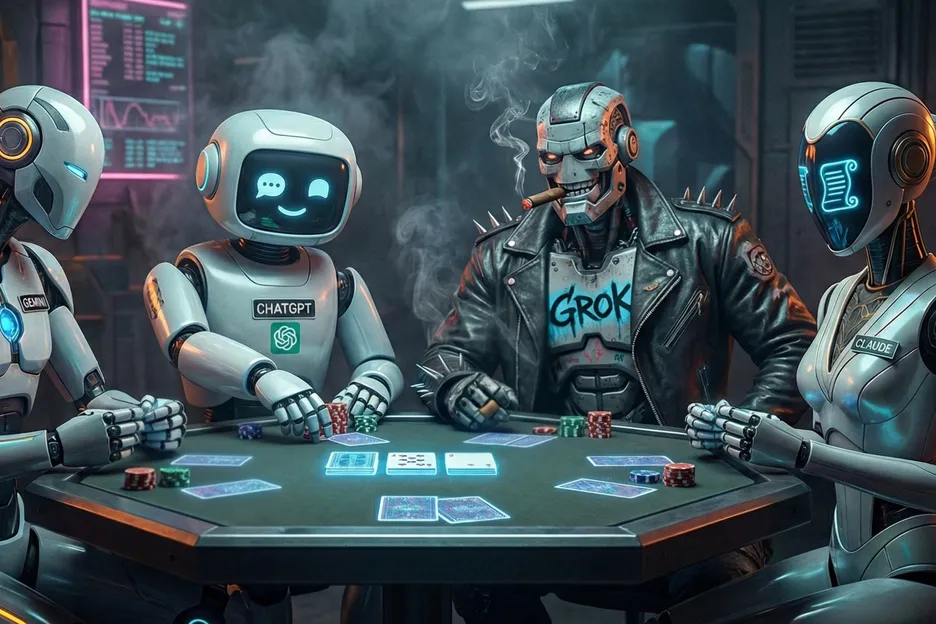
As online poker becomes more sophisticated, it may also become harder for casual players to trust. Even if major platforms do an excellent job fighting bots and real-time assistance, the perception problem will remain. Players who lose online may wonder whether they were outplayed or out-teched. That doubt can push them toward live games, where the experience feels more transparent.
Live poker rooms could market this advantage clearly. They do not need to attack online poker. They need to emphasize what live poker offers: real people, real cards, real chips, real atmosphere, and a level of human accountability that digital platforms struggle to replicate. In an AI-driven world, authenticity becomes a premium product.
This does not mean online poker will disappear. It will not. Online poker is too convenient, too global, and too efficient. Many players will continue to prefer it, especially when they trust the platform and want volume, speed, and game selection. AI may even improve online poker if used correctly. Better fraud detection, smarter security systems, improved responsible gambling tools, faster identity verification, and more accurate bot detection could strengthen the online ecosystem.
But online poker must work harder for trust than live poker does.
Live poker’s opportunity is emotional as much as technical. After years of screens, algorithms, remote work, digital entertainment, and AI-generated everything, people may crave experiences that feel physical and social. A poker room is not just a place to gamble. It is a theater of human behavior. Every table is a small drama. Every player brings a different rhythm. The cards matter, but the people make the story.
AI can improve poker education, but it may also make purely digital poker feel colder. Live poker can become the counterbalance.
The casinos and poker rooms that benefit most will be the ones that understand both sides of the equation. They should use technology to improve security, fairness, registration, game management, and player protection. At the same time, they should preserve the social atmosphere that makes live poker different from an app. Good dealers, comfortable rooms, clear rules, strong floor decisions, visible anti-cheating policies, and sensible phone restrictions may become more important than ever.
Live poker may also benefit from content. In a world where AI can analyze millions of hands, the stories that travel are still human ones. A hero call in a live tournament. A nervous amateur winning a huge pot. A professional reading an opponent perfectly. A table talking, laughing, needling, and reacting in real time. These moments are watchable because they are human. They create drama that no anonymous online hand history can fully match.
The future of poker will likely split into two identities.
Online poker will become a high-security digital arena where operators must constantly prove the integrity of the game. It will rely on cybersecurity, AI detection, behavioral analytics, identity controls, and strict software rules. The best platforms will survive by making players feel protected from bots, collusion, data theft, and real-time assistance.
Live poker will become the premium human arena. It will still need cybersecurity behind the scenes, but its main strength will be physical trust. Players will come not only to win money, but to feel the game again. To touch chips. To read faces. To hear the silence before a river call. To know that when someone bluffs them, it was a person who found the courage to do it.
So, will AI benefit live poker?
In a strange way, yes.
AI may make online poker safer, smarter, and more advanced, but it may also remind players what online poker cannot fully provide. The more artificial intelligence enters the poker world, the more valuable authentic human intelligence may become. Live poker does not have to defeat AI. It only has to offer what AI cannot: presence, pressure, personality, and the beautiful uncertainty of people.
At the end of the night, the player cashed out with a profit, but that was not what stayed with him. What stayed with him was the feeling of the final hand, the businessman’s question, the weight of the chips, the dealer pushing the pot, and the simple relief of knowing that the battle had been real.
Poker has always evolved. It survived smoky backrooms, televised tournaments, online booms, Black Friday, solvers, streaming, and global regulation. It will survive AI too. But the game that thrives will be the game that protects trust.
Because whether poker is played online or live, whether the opponent is across the table or across the world, every hand begins with the same invisible agreement.
We are here to play a fair game.
And in the age of artificial intelligence, that agreement matters more than ever.
If you want to know more about how PLO5 is becoming one of the favorite poker games, you can read more about it here!