Every serious online poker player remembers the first time the game stopped feeling like a card game and started feeling like a climb.
At the very bottom, the blinds are tiny. Two cents here, five cents there. The pots look harmless, almost too small to matter. But the player who treats those games like nothing usually stays there longer than expected. In online No Limit Hold’em cash games, especially in Rush and Cash, Zoom, Fast Forward, and other fast-fold formats, every blind level teaches a different lesson. The cards are the same, the rules are the same, and the software still moves you to a new table the moment you fold. But the way people play changes dramatically as you rise.
The road from 2c blinds to $2 blinds is not just about making more money. It is about learning which mistakes disappear, which mistakes become expensive, and which habits must be rebuilt before the next level punishes them. Fast-fold poker is brutal because it removes waiting time. You do not sit and watch one table for an hour, learning who is tilted and who is scared. You enter hand after hand after hand, facing a constantly rotating pool of opponents. That speed makes the games exciting, but it also magnifies leaks. A small calling mistake at regular tables might happen ten times in a session. In Zoom or Rush and Cash, it might happen fifty times before you realize it.
Mastering online No Limit cash games means understanding that each blind level has a main lesson. At the smallest stakes, you learn discipline and value. At the next levels, you learn position, aggression, and table-pool tendencies. At the middle levels, you learn how to fight back against regulars without spewing. By the time you reach $1/$2 blinds, you are not just playing your cards anymore. You are playing ranges, frequencies, timing, population tendencies, and your own mental endurance.
The 2c and 5c Cash Games: Learning to Win Without Being Clever
At 2c and 5c blind fast-fold games, the first great secret is simple: most players are not folding enough, and many are not thinking deeply about your range. That means your job is not to outplay everyone with fancy bluffs. Your job is to value bet relentlessly, fold when clearly beaten, and avoid donating chips with hands that look pretty but play badly.
Imagine a new player opening four tables of fast-fold poker for the first time. The action comes quickly. Ace-jack suited appears, then pocket sevens, then king-ten, then a small suited connector. Everything feels playable because there is always another hand coming. This is where the first leak begins. Fast-fold poker makes average hands look better because boredom disappears. You are no longer waiting for cards, so you start convincing yourself that marginal spots deserve action. They usually do not.
At these levels, the main focus should be preflop discipline and strong postflop value betting. You should play tight from early position, open wider from the cutoff and button, and avoid calling too many raises out of the blinds. Calling from the small blind with hands like king-nine suited or queen-ten offsuit may feel harmless when the blind is only two cents, but the habit becomes dangerous later. In fast-fold pools, you rarely get deep personal reads, so weak out-of-position calls turn into repeated guessing games.
The best adjustment at 2NL and 5NL is to build a simple, clean strategy. Raise your strong hands. Isolate limpers with hands that dominate their range. Do not slowplay big hands too often. When you flop top pair with a strong kicker against loose opponents, bet for value. When you make an overpair on a dry board, keep betting unless the action clearly tells you to stop. Many players at these stakes call too much with second pair, weak draws, ace-high hands, and underpairs. Punish that by making them pay.
Bluffing should exist, but it should be controlled. The most profitable bluffs at these levels are not wild triple-barrel stories against unknown players. They are simple continuation bets on good boards, small steals from late position, and occasional pressure when obvious draws miss. If you try to represent complicated ranges against players who are only looking at their own pair, you are wasting money. Your opponent cannot fold the hand they came to the table to play if they never asked what you are representing.
The biggest mental adjustment is respecting small pots. A player who says, “It is only a few cents,” is training themselves to make bad decisions. The amount changes later, but the decision pattern stays. If you call a river raise at 5NL because you are curious, you may call the same river raise at 200NL because curiosity has become part of your poker identity. At the bottom levels, your goal is to become boring in the best possible way. Tight, aggressive, observant, and patient. You are building the foundation.
The 10c, 25c, and 50c Cash Games: Position, Pressure, and Pool Reading
By the time you reach 10c, 25c, and 50c blind games, the pool begins to change. There are still recreational players, and there are still opponents making obvious mistakes, but more regulars appear. They understand opening ranges. They continuation bet more often. They steal blinds. They use HUD stats if the site allows them. They know that fast-fold poker rewards volume, and many of them are grinding thousands of hands.
This is where the story becomes more interesting. The player who crushed 2NL by waiting for big hands and value betting may still win, but the win rate often drops. Suddenly, open raises get three-bet more often. Button steals are defended more aggressively. Continuation bets do not print money automatically. Opponents start recognizing capped ranges, weak turn checks, and obvious overfolding.
At these levels, your main focus should be positional awareness and controlled aggression. Position is not just a poker concept you mention in strategy articles. In fast-fold No Limit Hold’em, position is the difference between making money with medium-strength hands and burning money with them. A hand like ace-ten suited can be a profitable open from late position and a difficult call from the blinds. Pocket fives can be a clean open in many spots but a poor call against a tight early-position raise if stacks and implied odds are not favorable. The same hand changes value depending on where you sit, who opened, stack depth, and how the pool reacts.
If you are looking for a site to play poker and want a good rakeback deal, you should check out Champion Poker, as it offers flat rakeback of up to 30%.
The key adjustment from micro stakes to these levels is that you must stop playing only your cards and start playing your range. When you open from the button, your range is wide. When you open under the gun, your range is stronger. Good opponents know this, and you need to know that they know. You should continuation bet boards that favor your range, check boards that smash the caller, and think carefully before firing multiple streets on textures where your opponent has more strong hands than you do.
In Rush and Cash, Zoom, and Fast Forward games, population tendencies matter because individual reads are limited. You may not know that one specific player overfolds to turn barrels, but you can learn that the pool at 25NL tends to overfold in certain single-raised pots, or that players under-bluff river raises, or that blind defenders call flop too wide but fold turns too much. These pool reads become your invisible edge. They replace the live poker stare-down. They are how you find patterns in chaos.
Your three-bet strategy should also become sharper. At the lowest levels, many players three-bet only premium hands and still get paid. At 25NL and 50NL, you need a more balanced approach, especially from the blinds and button. That does not mean blasting every suited blocker hand into the pot. It means understanding why ace-five suited can be a good three-bet bluff in certain positions, why hands like ace-queen and pocket jacks may prefer value three-bets, and why cold calling too often creates difficult multiway spots.
Postflop, the most important upgrade is learning when one pair is not a stack-off hand. In the smallest games, top pair top kicker often feels like gold. At higher micro and lower small stakes, opponents are more capable of applying pressure with polarized ranges. Some will bluff more, but many still under-bluff large river bets. You need to distinguish between aggression that is common and aggression that is actually credible. A flop check-raise on a wet board may include draws. A river check-raise after the flush completes is often much more value-heavy, especially from passive players.
The emotional challenge also grows here. At 50NL, the pots are no longer meaningless to most bankrolls. A lost stack can sting. Fast-fold poker makes that sting dangerous because another hand appears instantly. You can lose a buy-in, click fold, and be dealt ace-king within seconds. If your mind is still trapped in the previous pot, you may overplay the next one. The real skill at these levels is not just technical. It is the ability to reset quickly.
The $1 Cash Games: Fighting Regulars Without Losing Yourself
Moving into $0.50/$1 fast-fold cash games is a major psychological checkpoint. The money feels real. The regulars are more prepared. The weak players still exist, but they are not always sitting directly to your right waiting to give chips away. The pool becomes more aggressive, more positionally aware, and more capable of attacking obvious leaks.
This is where many winning micro-stakes players become break-even. They arrive with confidence, but their old formula starts failing. They open the same ranges, continuation bet the same boards, and value bet the same hands. Then they discover that opponents float more, raise more, and punish capped lines. They also discover that not every aggressive player is bluffing. Some are simply applying pressure in spots where the range advantage is theirs.
At $1 blind games, the main focus should be range construction, defense frequencies, and selective exploitation. You need to understand which hands belong in your betting range and which hands belong in your checking range. You need to defend enough against steals and three-bets without turning every spot into a personal battle. You need to know when to bluff catch and when to accept that the pool is under-bluffing a line.
Fast-fold games at this level reward players who can make strong default decisions without becoming robotic. Because the player pool rotates constantly, you need a baseline strategy that does not collapse against competent opponents. Your opening ranges should be disciplined but not overly tight. Your three-bets should include both value hands and appropriate bluffs. Your blind defense should be careful because playing out of position against good players is expensive, but overfolding blinds allows regulars to steal from you relentlessly.
One of the biggest adjustments is understanding that aggression has to tell a believable story. At 5NL, you might fire a big river bluff because the scare card arrived and your opponent seems weak. At 100NL, your opponent may ask whether that card actually improves your range. If it does not, they may call you down. Your bluffs need blockers, board logic, and credible value representation. If you are representing a flush, it helps to hold a key card that blocks your opponent from having the nut flush. If you are representing a strong overpair, your preflop action needs to support that story.
Another major change is that thin value becomes more important. At the lower stakes, you can often wait for strong hands and still get paid. At $1 blind games, win rates shrink if you miss value with medium-strong hands. A second pair that checks back automatically may sometimes deserve a river value bet against the right range. Top pair with a decent kicker may be too strong to play passively on certain runouts. The better the pool becomes, the more your edge comes from small, accurate bets rather than huge obvious mistakes.
Still, the danger is over-adjusting. Many players reach this level and decide they must become fearless. They start four-bet bluffing too much, check-raising without enough equity, and bluff catching because they do not want to be exploited. But poker is not won by refusing to fold. It is won by folding correctly, calling correctly, and raising correctly. At $1 blind fast-fold games, ego becomes one of the most expensive leaks. You cannot win every pot. You cannot punish every regular. You cannot prove something every time someone three-bets your button open.
The best players at this level are not the wildest. They are the most composed. They identify which opponents are over-aggressive, which are playing too straightforwardly, and which are simply solid. Against over-aggressive players, they let them bluff into strong ranges. Against tight players, they steal more and avoid paying off big river bets. Against solid regulars, they choose better battles and protect their own frequencies. They do not need drama. They need precision.
The $2 Blind Games: Precision, Mental Strength, and the Long Climb
At $1/$2 blinds, fast-fold online cash games become a serious arena. The jump from lower stakes is not only financial. It is strategic. The average regular is tougher, the recreational players are less frequent, and the cost of autopilot is much higher. A small mistake repeated across thousands of hands can become a major leak. A poorly chosen river bluff can cost a full buy-in. A bad mental habit can destroy a week of good play in one tilted session.
The main focus at $2 blind games should be precision. Not perfection, because no poker player has that, but precision in the decisions that repeat most often. Blind versus button. Big blind defense against small blind opens. Three-bet pots out of position. Continuation betting in single-raised pots. Turn barreling after range-changing cards. River bluff catching against polarized lines. These are the spots that define your win rate because they happen constantly in fast-fold formats.
At this level, you need to study away from the table. Playing volume alone is no longer enough. Solvers, database reviews, population reports, hand history analysis, and structured leak finding become essential. You do not need to copy solver outputs blindly, but you do need to understand the principles behind them. Which boards favor the preflop raiser? Which boards allow range betting? Which turns shift equity? Which river cards are better for the caller? Which hands are too strong to fold but too weak to raise? These questions separate serious players from hopeful grinders.
The biggest adjustment from 2c blinds to $2 blinds is that your strategy must become layered. At the bottom, you win because opponents call too much and value is king. In the middle, you win because you understand position and pressure. At $2 blinds, you win because you combine theory with exploitation. You know what a balanced strategy looks like, but you also know when the pool is not balanced. You know that some regulars still overfold to four-bets. Others over-defend the big blind but fold too much on turns. Some bluff rivers aggressively when draws miss, while others are almost never bluffing after taking a passive line and suddenly raising.
Fast-fold poker makes these reads harder, but not impossible. Your database becomes your memory. Your notes become your live reads. Your discipline becomes your table selection, even in a format where traditional table selection barely exists. You must know when the pool is good, when the games are reg-heavy, and when your own focus is slipping. In Rush and Cash or Zoom, quitting is a skill. Because another hand is always available, the game constantly invites you to continue. The strongest players know when continuing has negative expected value.
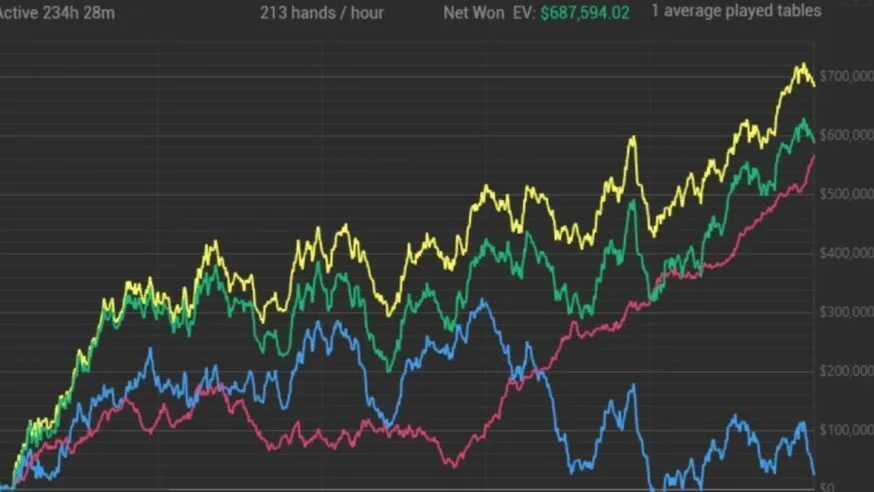
Bankroll management also becomes more serious. Moving from 2NL to 200NL is not just moving decimal points. Variance expands as opponents become more aggressive and edges become smaller. A player crushing the lowest stakes may feel invincible, but at higher fast-fold pools, downswings are normal even for winning players. You need enough buy-ins to play without fear and enough humility to move down when necessary. Moving down is not failure. It is bankroll defense. It keeps your decision-making clean.
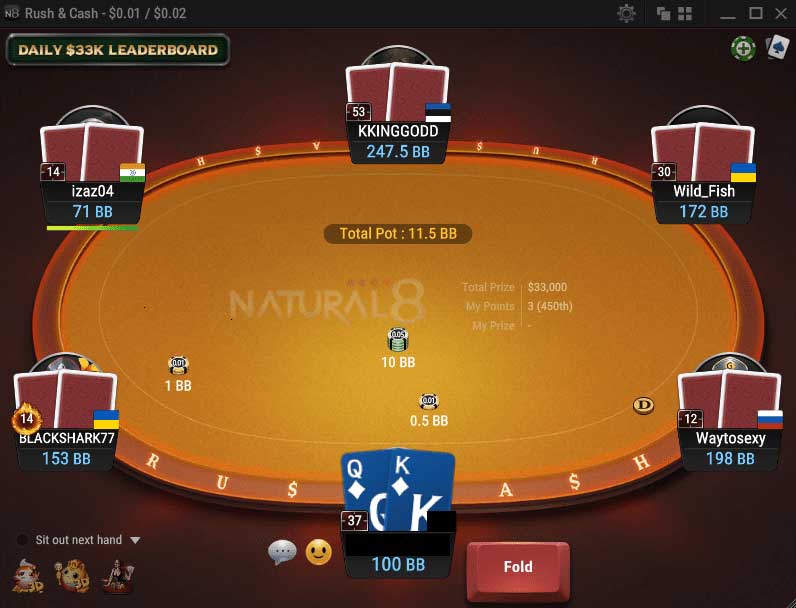
You can see more of Cash Games action on 200NL Rush and Cash in the video below..
The final stage of mastering online No Limit cash games is realizing that each level never fully disappears. The value discipline learned at 2NL still matters at 200NL. The positional awareness developed at 25NL still matters. The range work from 100NL still matters. The emotional control required at 200NL should have been trained from the very first two-cent blind. Every level is a classroom, and every leak you ignore becomes tuition.
The climb through Rush and Cash, Zoom, and Fast Forward games is not glamorous every day. Some sessions are quiet. Some are frustrating. Some feel like you are folding forever, only to lose the one big pot you finally play. But the players who succeed in fast-fold No Limit Hold’em are not chasing constant excitement. They are chasing better decisions at higher speed. They understand that the format rewards preparation, discipline, and emotional control more than impulsive creativity.
From 2c blinds to $2 blinds, the mission changes, but the core remains the same. Play stronger ranges than your opponents. Use position like a weapon. Value bet when the pool calls too much. Bluff when the story is credible and the opponent can fold. Defend enough to avoid being exploited, but not so much that ego replaces logic. Study the spots that repeat. Respect bankroll management. And above all, remember that fast-fold poker is a marathon disguised as a sprint.
The cards come quickly. The tables change instantly. The opponents blur together. But your decisions remain. Hand after hand, blind after blind, level after level, those decisions tell the real story of whether you are just playing online poker or truly mastering online No Limit cash games.
If you always wanted to know, “What Takes More Skill and Knowledge in Poker: Cash Games or MTTs?” you can read an article about it by clicking here..