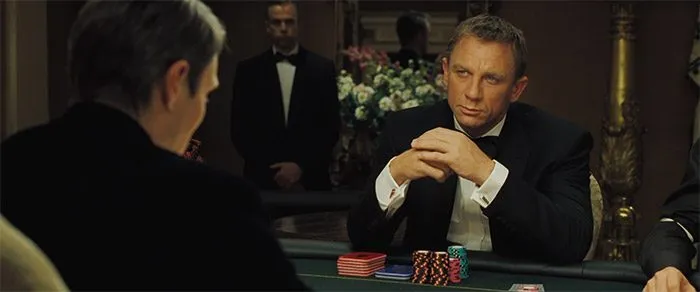
It was sometime in the mid-2010s, in a dimly lit casino where the chips clicked like clockwork and the players still believed in instinct. Across the felt sat two regulars: one, a seasoned grinder who trusted his gut; the other, a quiet newcomer who barely spoke and never seemed rattled.
The hand itself wasn’t remarkable, at least not at first. A standard raise, a call, a dry flop. But then something strange happened. The newcomer made a bet that didn’t quite make sense. It wasn’t big enough to scare, not small enough to invite. It just… existed.
The grinder frowned. “Why that size?”
The newcomer shrugged. “It’s what the situation calls for.”
A few years earlier, that answer would’ve sounded like nonsense. But on that night, it was something else entirely. It was the first whisper of a new language in poker, a language written not by intuition, but by machines.
Solvers had arrived.
Before the Machines: Poker as Art
Poker, for most of its modern history, was treated like a blend of psychology, courage, and storytelling. The best players were readers of people, masters of timing, and performers at heart. You didn’t just play your cards, you played your opponent.
Strategies were passed down like folklore. Books talked about “feeling the moment” or “trusting your read.” Even mathematically inclined players still leaned heavily on heuristics, rules of thumb that worked often enough to be profitable.
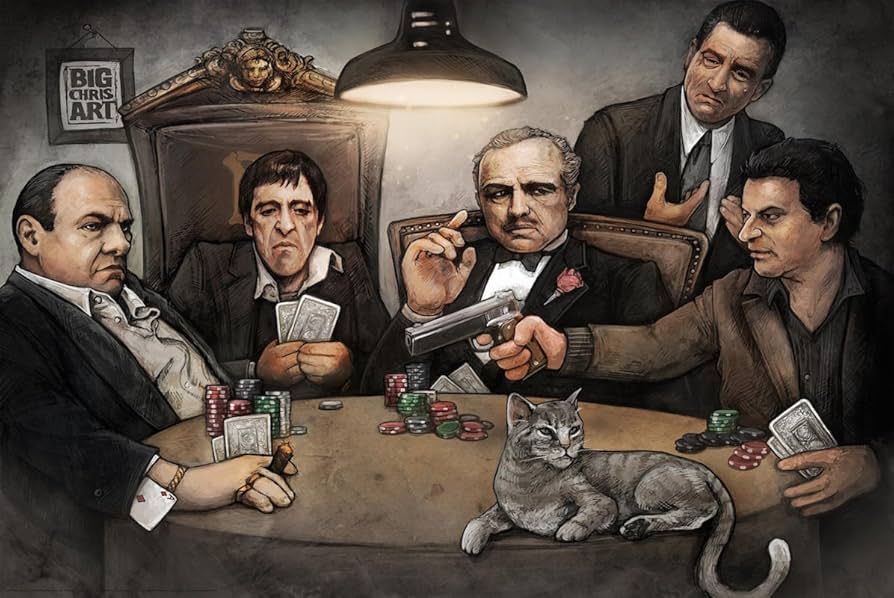
There was structure, of course. Concepts like pot odds, position, and aggression were well understood. But the deeper layers—the exact frequencies, the balance between bluffs and value, the subtle interplay between ranges, remained murky.
Poker was part science. Mostly, it was art.
Then solvers changed that balance.
Enter the Solver: Poker Meets Game Theory
A poker solver is a program designed to approximate optimal strategies using game theory, specifically, the concept of Nash equilibrium. Instead of guessing what works, solvers calculate strategies that cannot be easily exploited.
Feed a solver a situation, stack sizes, positions, board texture, and it produces a blueprint: how often to bet, how large to size, which hands to bluff, and which to check.
At first, these outputs were overwhelming. They didn’t look like traditional poker advice. They looked… alien.
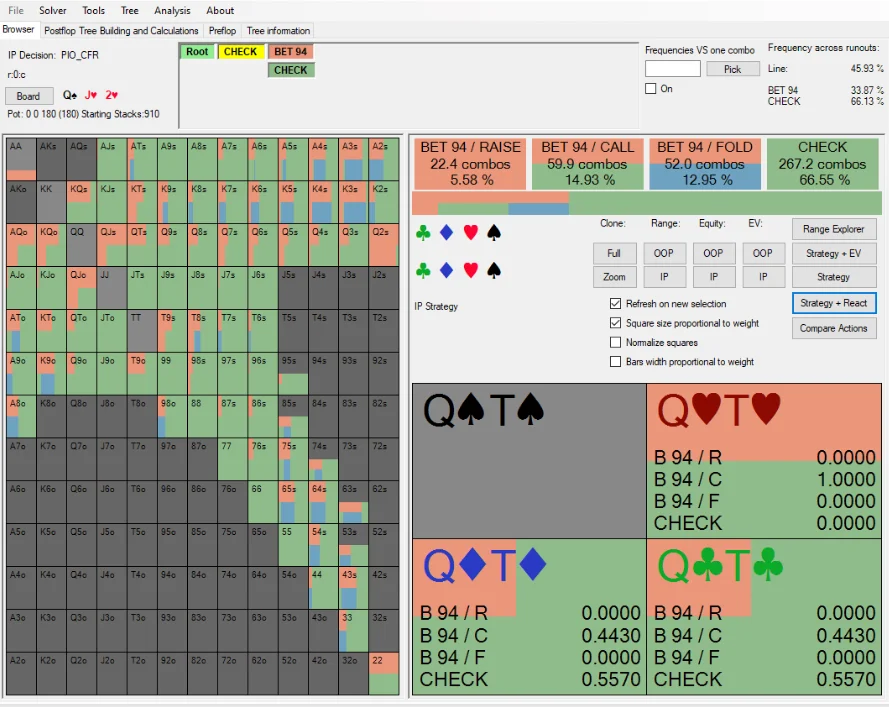
Why bet small with strong hands?
Why check hands that seem like obvious bets?
Why bluff with weak hands but not slightly stronger ones?
The answers weren’t intuitive. But they were consistent. And more importantly, they worked.
The Death of “Standard Play”
Before solvers, there was such a thing as “standard play.” You raised certain hands, continuation-bet most flops, and folded when things got uncomfortable.
Solvers shattered that idea.
They revealed that there is no single “standard”, only context. A hand that’s a clear bet on one board becomes a check on another. A size that works in one spot becomes suboptimal elsewhere.
Even more disruptive was the concept of mixed strategies. Solvers often recommend doing different actions with the same hand at certain frequencies, betting 70% of the time, checking 30%.
To a human, this felt unnatural. Why not just pick one action?
Because predictability is exploitable. Solvers taught players that randomness, controlled randomness, was a weapon.
Suddenly, poker wasn’t about finding the “right” play. It was about finding the right distribution of plays.
The Rise of Precision
With solvers came precision. Players began studying not just what to do, but how often to do it.
Instead of saying, “You should bluff here sometimes,” the conversation became, “You should bluff here 35% of the time, using these specific hands.”
Bet sizing evolved dramatically. Solvers introduced a variety of sizes, small bets, overbets, even multiple sizes within the same range. Each size served a purpose, targeting different parts of an opponent’s range.
This level of detail transformed the game. Decisions that once relied on feel were now grounded in structured logic.
The quiet newcomer in the casino? He wasn’t guessing. He was executing.
A New Kind of Player
As solvers became more accessible, a new generation of players emerged. They weren’t necessarily more experienced, but they were deeply studied.
They spoke in terms of ranges, equity, and frequencies. They reviewed hands not by asking “what did my opponent have?” but “what does my range look like here?”
They trained with software, ran simulations, and memorized patterns.
To older players, it felt like the soul of poker was being replaced. The table talk, the reads, the drama—it all seemed diminished.
But in reality, the game wasn’t losing depth. It was gaining a different kind of depth.
The Human Element Fights Back
For all their power, solvers aren’t perfect. They assume opponents play optimally. Real players don’t.
This created an interesting tension. If you play exactly like a solver, you’re unexploitable, but you might miss opportunities to exploit weaker opponents.
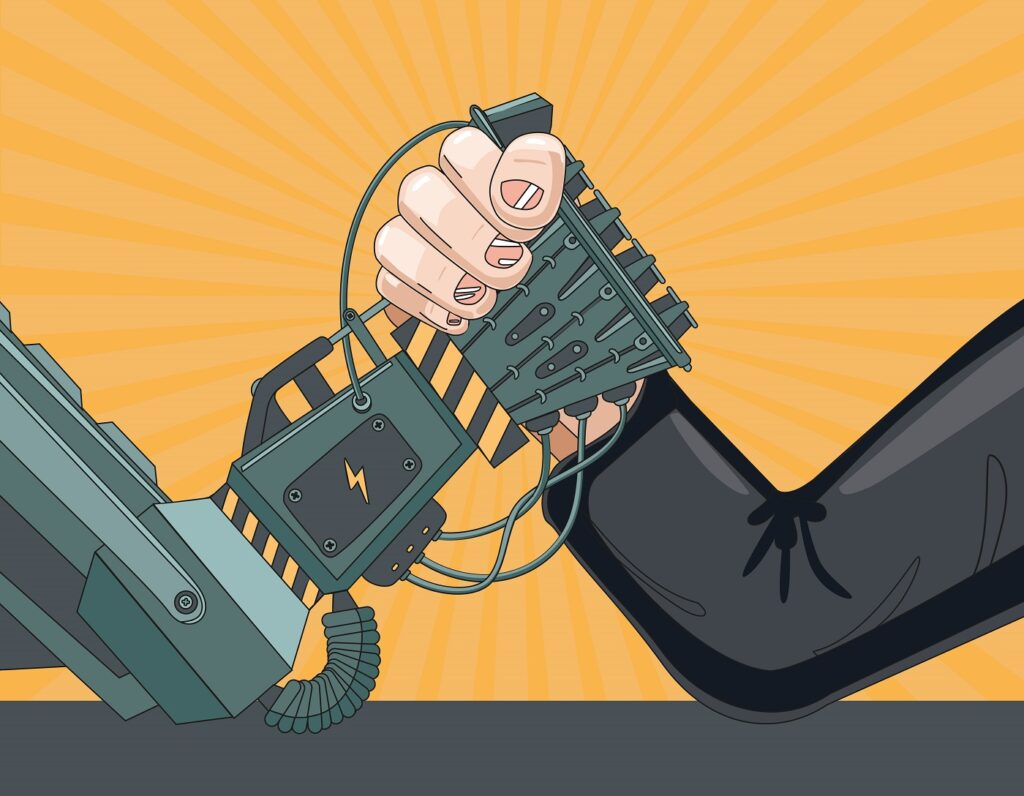
The best players learned to balance both worlds. They used solvers as a foundation, a baseline strategy, and then adjusted based on real-world tendencies.
If someone folds too much, you bluff more.
If they call too often, you value bet thinner.
In this way, solvers didn’t eliminate the human element. They refined it.
The art of poker didn’t disappear. It evolved.
The Cost of Knowledge
There was, however, a price. Poker became harder.
Edges shrank as more players studied optimal strategies. Games that were once soft became competitive. Casual players found themselves up against opponents who had spent hundreds of hours studying solver outputs.
The barrier to entry rose. To compete at higher levels, understanding solver-based concepts became almost mandatory.
For some, this was discouraging. For others, it was exciting, a sign that poker was maturing into a true intellectual sport.
If you are looking for a site to play poker and want a good rakeback deal, you should check out Champion Poker, as it offers flat rakeback of up to 30%.
Beyond the Table
Solvers didn’t just change how poker is played, they changed how it’s taught and understood.
Training sites, coaching programs, and study groups all shifted toward solver-based analysis. Hand discussions became more technical, more precise.
Even broadcasts began to reflect this shift, with commentators referencing ranges and equilibrium strategies.
Poker, once a game of mystery, was becoming a game of clarity.
The Future: Man and Machine
Today, solvers are a standard tool in any serious player’s arsenal. But their role is still evolving.
Some fear that continued advancements, especially with AI, could push the game too far, making it overly mechanical. Others believe that human creativity will always find a way to shine through.
The truth likely lies somewhere in between.
Solvers have given players a map. But maps don’t replace the journey. They guide it.
Back to the Table
Imagine that same casino, years later.
The grinder is still there, but he’s changed. He studies now. He understands why that strange bet size made sense. He’s incorporated it into his own game.
Across from him sits another newcomer, calm, quiet, calculating.
The cards are dealt. The chips move. The decisions are made.
But beneath it all, something is different.
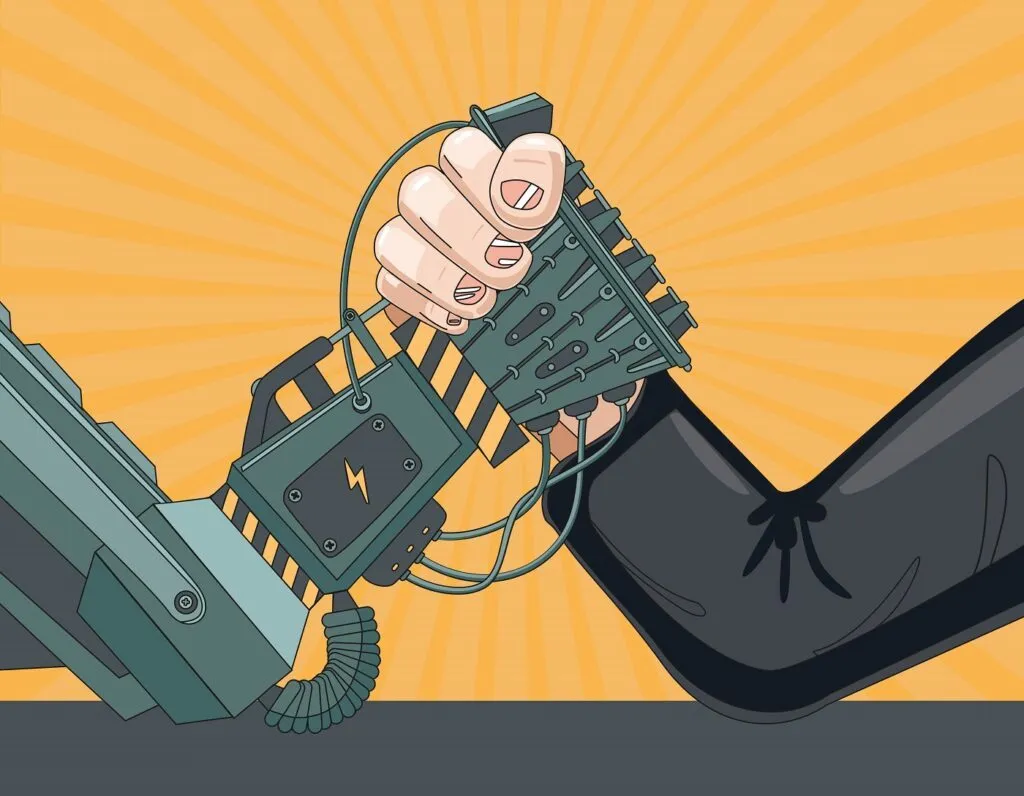
Poker is no longer just a battle of wills or instincts. It’s a dialogue between human intuition and mathematical truth.
And somewhere in that dialogue, the game has never been richer.
If you want to improve your poker skills, you can read the article on “How to Improve Your Red Line in Poker” by clicking here.