Poker is a game where many things are happening at once, and it is often hard to understand everything. For some situations, you just know—or think you know—what you need to do, but you don’t always know exactly why. In this article, we will talk about where money comes from in poker, and we will highlight a few important spots where we can see this in action.
When we play poker, we are not instantly rewarded for good decisions, nor are we instantly punished for bad ones. However, over a large enough sample, the EV of our decisions accumulates and eventually returns money to us based on the quality of those decisions. This is why it is difficult to know whether a particular decision was great, good, average, or bad, and why we need to use solvers to find out and polish our game.
Example 1: CO vs BTN 3-bet
A common spot where we will face aggression is when we open from the cutoff and an aggressive opponent 3-bets us wide from the button, leaving us with a difficult decision. If we are opening GTO ranges, there will be a number of hands that we simply have to give up and fold, and this is how an overly aggressive opponent exploits us.
The adjustment we should make is to open tighter and include only hands that we are willing to defend. This way, our range will either 4-bet or call when faced with a 3-bet from the button. By doing this, we make our opponent’s strategy unprofitable, and we save money by avoiding open-folding the bottom of our range.
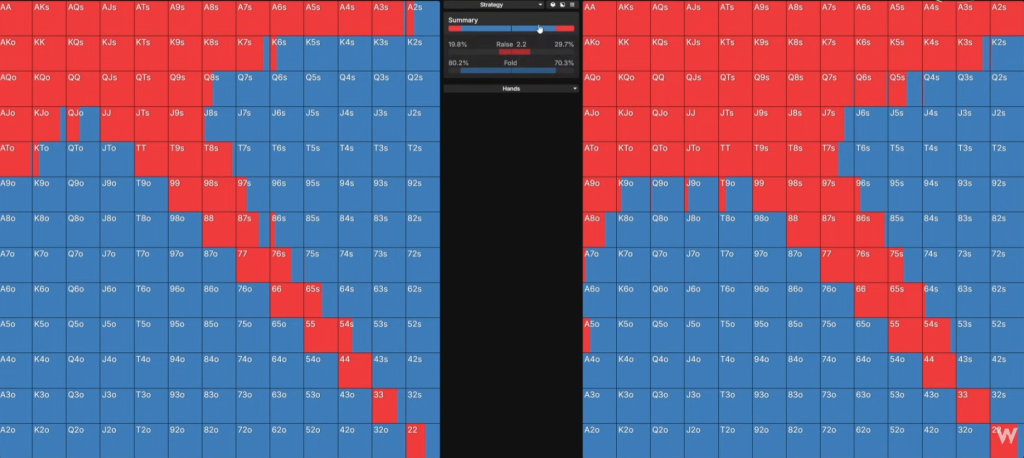
In the image above, we can see the GTO range on the right, which loses money against this kind of aggressive 3-betting opponent. On the left, we see the adjustment we should make to reduce losses and start making money against our opponent when we open.
In this example, money comes from having a stronger range than our opponent. We gain EV from their marginal hands (which they have more of than they should), while also avoiding losses by folding our own marginal hands.
Example 2: BB Raise vs SB Limp/Open
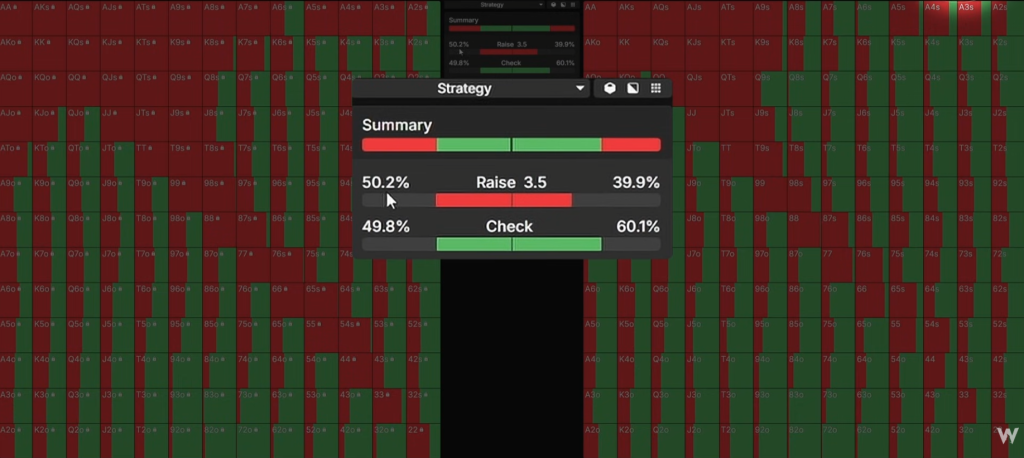
Another spot that happens quite often is when we limp from the small blind and the big blind raises against limps more aggressively than they do against regular opens. Against this type of opponent, we want to start limping more of our strong hands and raising more of our weak hands.
This is how we make more money from our opponent: by playing bigger pots with our strong hands and winning those big pots more often. At the same time, our weaker hands will realize more equity because we will get 3-bet less often. This is especially true for weak hands with good blockers, such as A2o–A6o.
Example 3: Putting In More Money With the Strongest Hands
When we have some of our strongest hands (90%+ equity), we should always be looking for ways to put more money into the pot and increase its size early in the hand. Avoiding slow plays and unnecessary trickiness with our strongest hands will make us a lot of money. In this case, the money comes from building the pot early with a strong hand, which leads to larger bets on future streets that we will often win.
The money we gain by slowplaying is usually not enough to compensate for the value we miss by not betting. Because of this, it is generally better to almost never slowplay hands with 90%+ equity.
In general, we don’t need to slowplay against passive opponents. However, if we never slowplay against aggressive opponents, they can start attacking us whenever we check, since a check would signal that we do not have a strong enough value hand.
Conclusion:
Most of the money in poker comes from building the pot when we have our strongest hands, so that we end up playing the biggest possible pots with our best hands. At the same time, the more equity we realize with our weaker hands—by avoiding being forced to fold to 3-bets or raises and by trying to see as many streets as possible at a cheaper price—the more money we will make.
It is important to understand how each hand realizes its value and what adjustments we can make to capitalize on our opponents’ mistakes (such as being a calling station, 3-betting too much, or not defending enough).
If you are interested in learning more about poker theory, you can read our article about the three main phases of a poker career by clicking here.