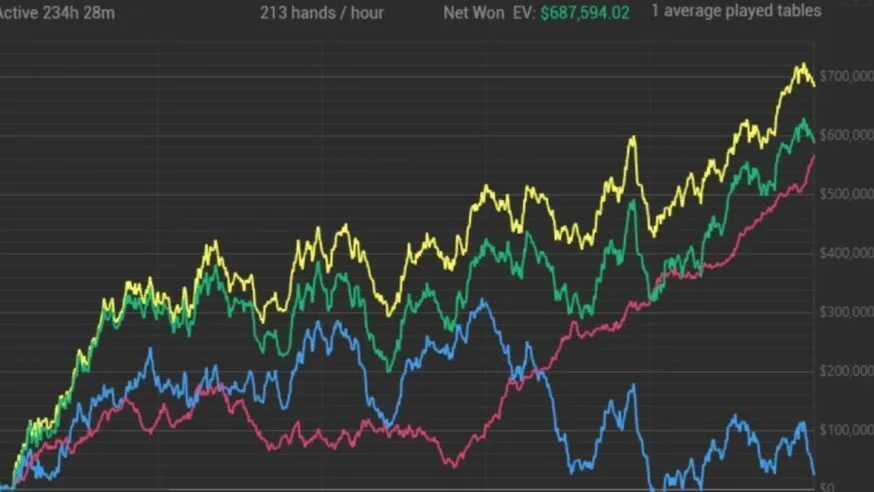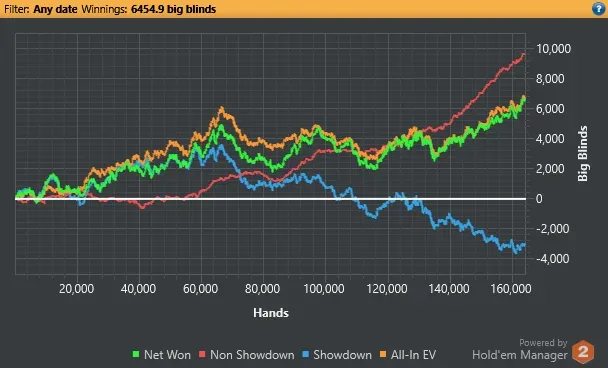
Playing poker can be done successfully in many different ways, and each of these approaches fits naturally with different players. If we translate this into GTO terms, we could say that people tend to make different kinds of deviations from the Nash equilibrium, and we need to adjust accordingly if we want to exploit them without being exploited ourselves.
The main idea of red-line poker is to exploit others more than they exploit us. This comes from understanding how the player pool plays and identifying their main leaks.
The most common exploits occur in SRPs (single-raised pots), and this is where we should focus if we want to be successful with this type of poker approach.
Tips to Improve Your Red Line:
1. Be a Calling Station vs Weak Lines
In spots where we are playing as the BB against late-position opens (SB or BTN), we want to be more station-oriented against weak lines such as bet–check–bet, check–check–bet, and check–bet–bet. In these situations, we face weaker ranges and will win more often than against standard lines. Weak lines are known to be overbluffed by the population.
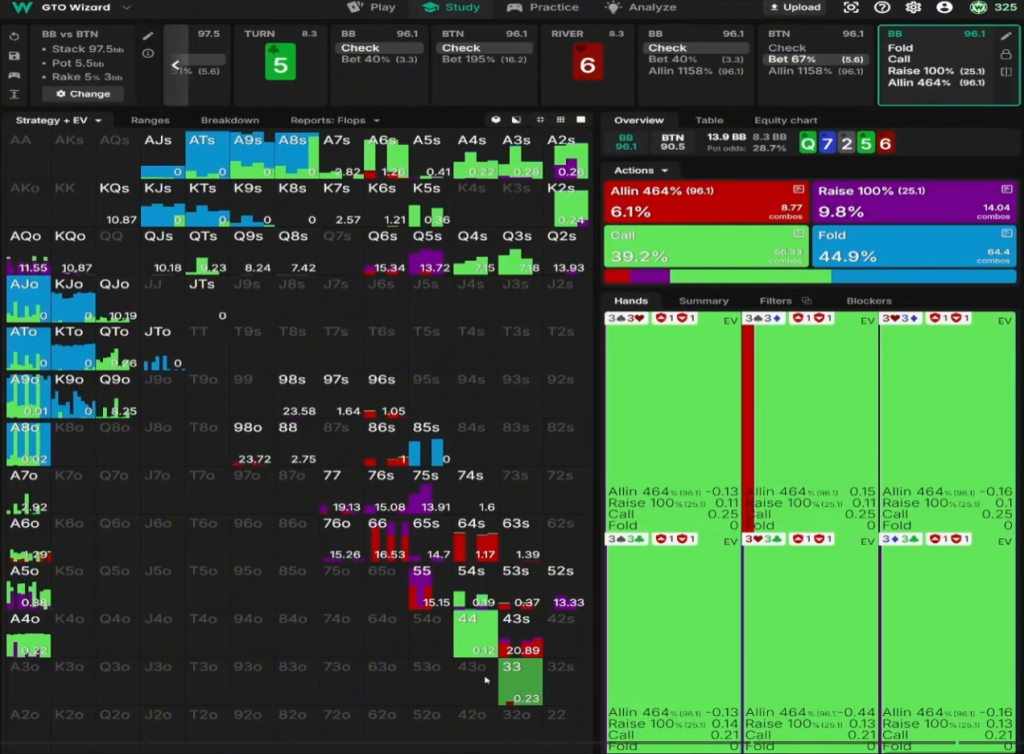
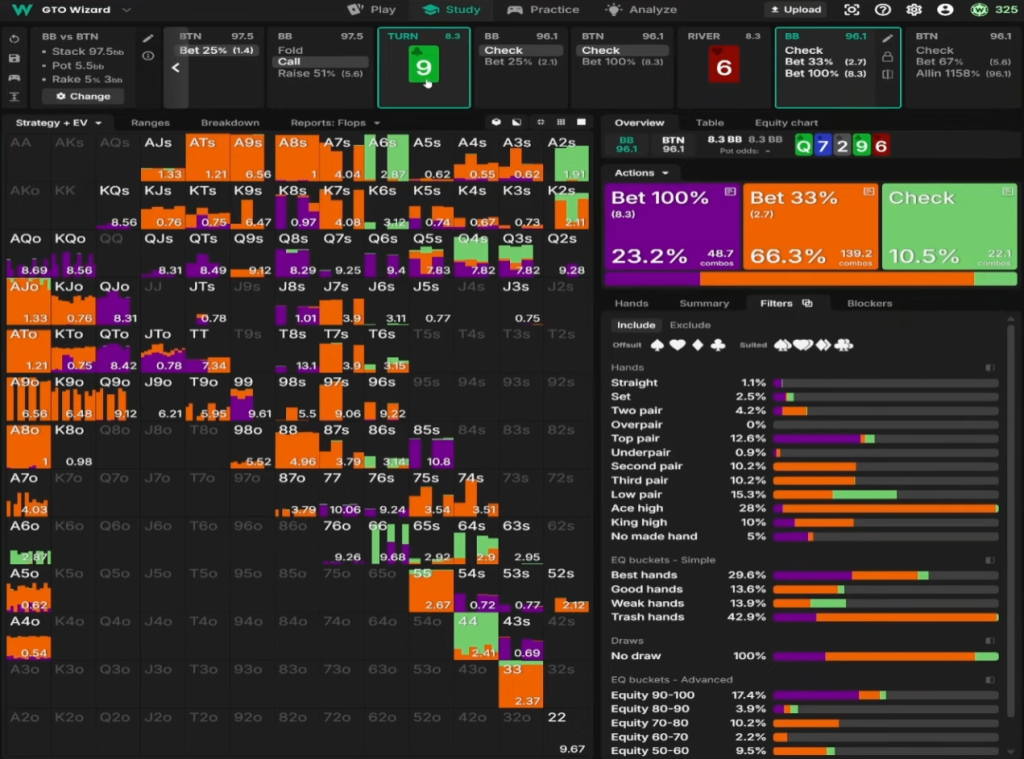
This image shows how wide we need to call on Q7256r as the BB versus the BTN against a bet–check–bet line. When our opponent (BTN) bets two-thirds of the pot on the river, we need to call down with ace-high, some king-high hands, and small pocket pairs.
This is what we should be doing if they are bluffing at the optimal frequency. However, if our pool is deviating from the Nash equilibrium by overbluffing or underbluffing, we need to adjust accordingly calling more against overbluffing players and folding more against underbluffing players.
2. Check-Raise the River
It is very unnatural for players to find bluffs when checking the river out of position, and most river check-raises are value bets that can be exploited by simply overfolding against them. However, if we want to push our red line higher, we should include more bluffs in this underbluffed and overfolded line.
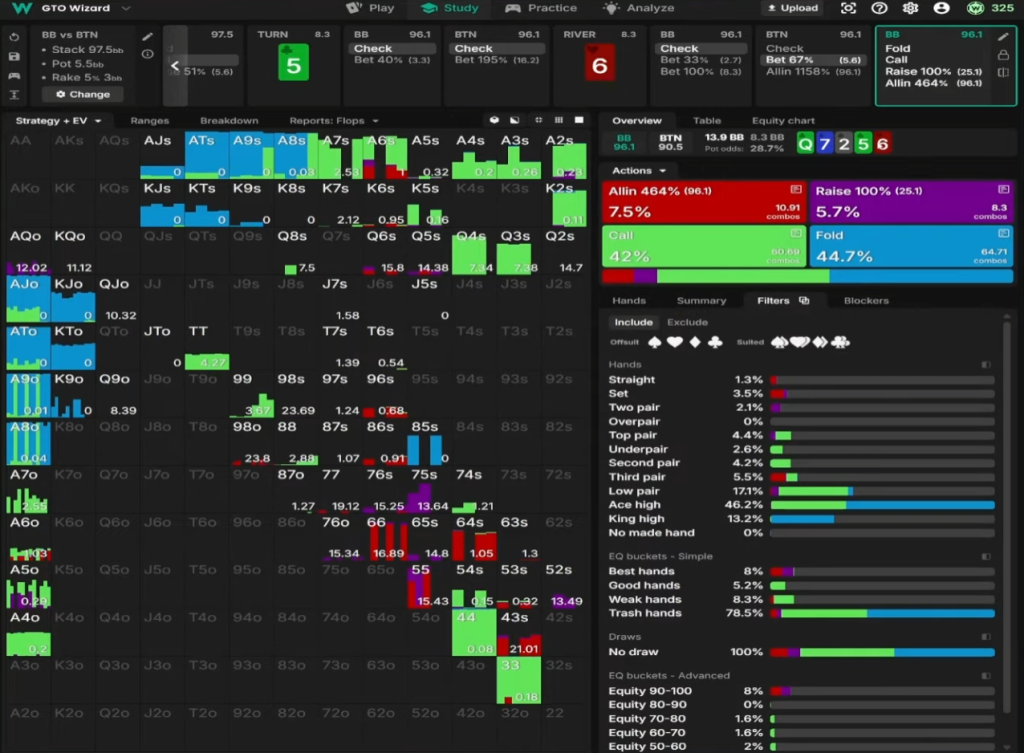
If we look at the image, we can see that the solver suggests raising and bluffing with a bunch of 6x hands, such as 63s, 64s, K6s, and 86s, as they block 65 combinations and straights. If we start bluffing more in these kinds of river spots, we will boost our red line and gain more EV.
If you are looking for a site to play poker and want a good rakeback deal, you should check out Champion Poker, as it offers flat rakeback of up to 30%.
3. Thin Value Betting/Stabbing
When we are playing out of position, we can start stabbing or block-betting against weak lines, as we know our opponents won’t raise often enough after they have weakened their range by checking.
They will also call down more lightly versus 33% stabs on the turn and river, giving us additional value. This puts our opponent in a bluff-catch scenario, where they either realize their equity or fold. At the same time, we take away their opportunity to bluff with air (which they won’t raise-bluff often enough), resulting in our red line going up.
Summary:
Implementing these three tips correctly will increase your win rate, and a larger portion of it will come from the red line. The population tends to overcall and overfold in certain spots, and it’s our job to identify those spots and make the right adjustments.
In general, players tend to be more passive than the solver; therefore, they bluff less and fold more, especially in “hotspots.”
If you want to improve your poker skills, you can read the article “Where the Money Comes From in Cash Game Poker?” which explains where the money comes from in specific spots.